
skater boy sighs so loudly I can hear it // kyra jee
from clear across the street. as for me, i am getting
used to calling myself insane
from clear across the street. as for me, i am getting
used to calling myself insane—it makes it
easier, actually being insane: like looking down seeing
the hole in the boat, a live salmon sticking
its notorious head into the crack before switching back
into the river, & myself realizing: oh that’s
why my ankles are wet. it’s not good
news; but if we waited to tell each other good things
then we’d never learn anything about anyone.
these days i am fuchsia with june
delusion, & only sometimes feeling
like a person. right after dinner
is usually ok, after the weather
has put itself away again. ever since it
happened, the stars have started to list & slide. jupiter’s
sprawling, saturn is spinning out—& don’t even
get me started on mars. or maybe it’s just the heat
of summer, lewd & docile in turns, that makes me
feel like less of a person. a person’s got to
work at that, i guess. so i do. on my list of things
to do this week, i have: mount the portrait
of edgar over the mantle; phone a new
dentist; figure out how cheetahs differ
from jaguars; make brownies. list
the good things that happened today.
here’s one:
after our friend comes back
from the future, the three of us sit by the pool,
surrounded on many sides by doors.
watching the new fence get put in,
as if the HOA isn’t leaving that gate open
ten hours a day just to get around the construction.
hey skater boy, what kind of sigh was that? i think
we might’ve had a few good things to say
to each other. for example, one thing i learned
this summer is that if you just stay put long
enough to count the calls of three or four
local birds in one go—sit on hot concrete with your
knees up & pluck out a pattern or two from the deluge
of war-cries & weather reports—that good feeling, it
probably won’t last all day; it’s not very durable.
but
so long as you’re sitting there, it is
a good feeling. warm, usually. unambitious,
dozing. & if you ever wanted to,
you could even be a bird yourself!
you see, it doesn’t matter how insane a bird is,
or if it does not feel very much like a bird today.
there is very little anyone can do
to make a bird stop being a bird. to make a bird
feel like less
of a bird.
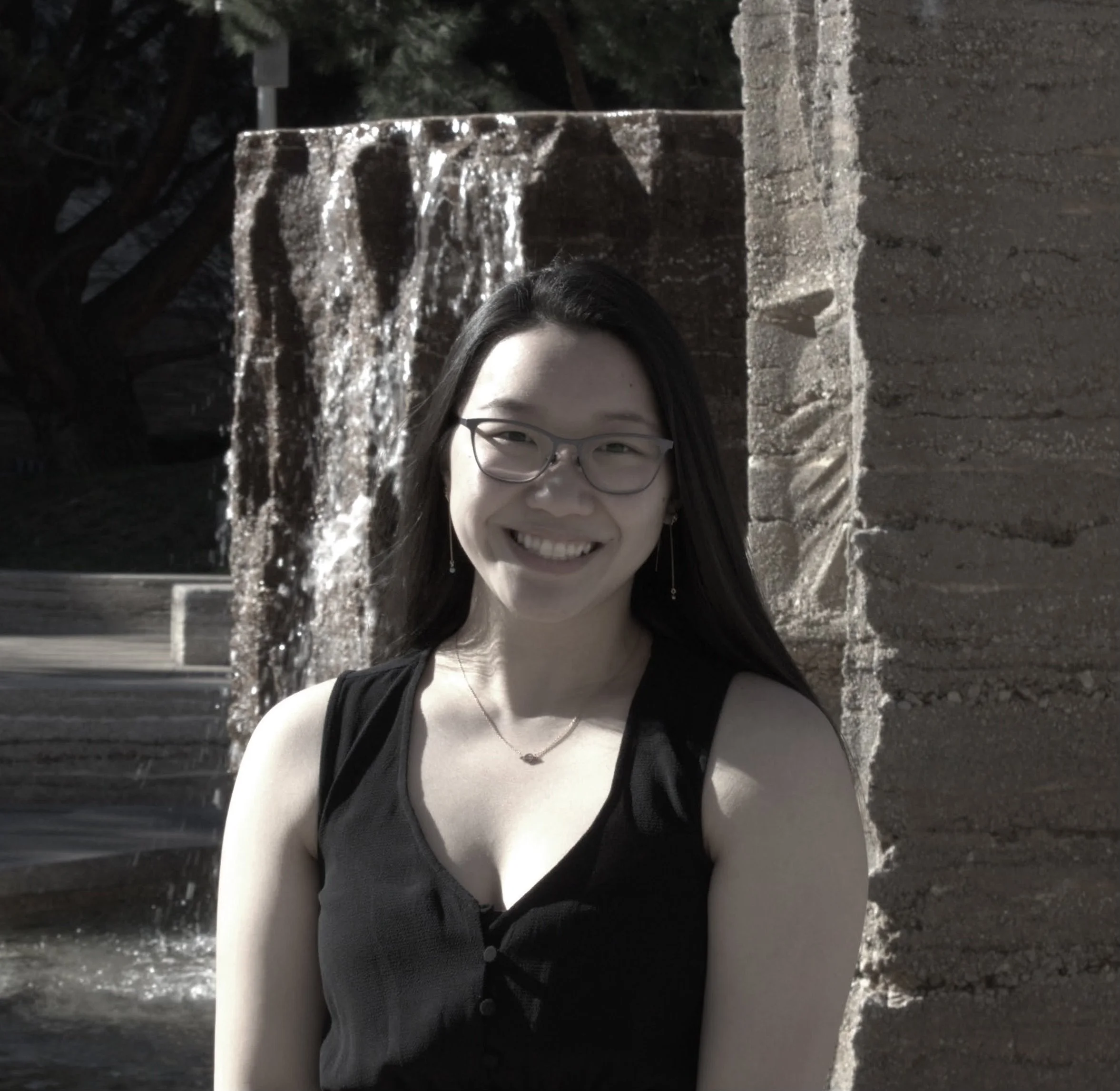
Kyra Jee is a Chinese-American poet from California. Her work has been published in Orion's Belt; Harbor Review; Scribendi, for which it received the Western Regional Honors Council Award for Poetry; The Allegheny Review; and elsewhere. One of the greatest writerly decisions she has ever made (so far, at least) was serving on the editorial board of a lit mag—she hopes to do so again someday.
TWO POEMS // Z.T. CORLEY
Can we meet somewhere outside of the erotic and the pornographic,
in a homeland of the mind, at a ramshackle gas station in South Carolina
Asexual Love Poem
after Diane Seuss
Can we meet somewhere outside of the erotic and the pornographic,
in a homeland of the mind, at a ramshackle gas station in South Carolina,
in the gap between James Baldwin’s teeth, under the dead tree in the backyard,
behind an abandoned cathedral, in a nation within a nation, at the mouth
of a river, on the border between the lands of the living and the dead,
in the prologue of an unfinished novel, in the throat of a wood thrush,
in a stranger’s house where we pose nude together for Deana Lawson,
beneath a cloud of blackbirds, under the influence of longing, in a black-
and-white short film where we both die in the end, in a country of feeling,
against the trunk of a pear tree, where the Devil refuses to beat his wife?
What It’s Like to be a Black Girl in the South
after Patricia Smith
It’s hunting for tadpoles
but being afraid of frogs. It’s waking early
and wearing white and praising the Lord
in the morning dark. It’s hotcombs
sizzling on the bathroom sink
and the possibility of being burned.
It’s being a grandma’s girl.
It’s bacon in the collard greens
and eating pig’s feet. It’s blowing away
the dandelion’s white afro
and always wishing for a puppy.
It’s being blue-black and nappy-headed
and happy to be alive. It’s South Carolina
as a way of seeing*. It’s the Old Testament God
and mamas who sleep all day.
It’s being your daddy’s afterthought.
It’s always being a little girl
standing outside your mama’s closed door,
even when you’re a grown woman.
* This line is a riff on a statement British-Ghanian Lynette Yiadom-Boakye once made in an interview about her art: “Ghana is present as a way of seeing.”
Z. T. Corley is an M.F.A. Candidate at Georgia College & State University. She is a reader for Callaloo and Sontag Mag, a recipient of the 2026 AWP Intro Journal Awards, and has been nominated for the Best New Poets Anthology. Her work appears or is forthcoming in Revolute, Callaloo, Kawandi Magazine, Quarterly West, and elsewhere. She is currently working on a poetry collection.
one in vermilion // lindsay mcleod
I've modified the memories and
dismantled the wants who once
beckoned with heavy eyelids and
loosened the vowels in my mouth.
I've modified the memories and
dismantled the wants who once
beckoned with heavy eyelids and
loosened the vowels in my mouth.
I have tried to forget the damage
that brought my wrists unstitched
leaving time and again not nearly
enough petal to balance the thorn.
The stagger of recollection persists.
This is why, where once I was
caked in courage, I now straighten
the rearing horses from my hair.
Lindsay McLeod's poetry can be found online easily enough and appears most recently in AS IT OUGHT TO BE, BACKCHANNELS, and CACTI FUR. Lindsay lives by the Port in South Australia with his blue cattle dog, Mary.
JELLYFISH // PJ CARMICHAEL
Watching the waves crash onto the
sandy shore. A broken beach umbrella blown
over by the breeze.
Watching the waves crash onto the
sandy shore. A broken beach umbrella blown
over by the breeze. Swatting at a green-
head buzzing around our legs. Pointing out a large
piece of driftwood, the remnants of a fallen tree
shaped by the sea. A smooth, silvery cylinder with
gnarled and knotted limbs (what once were its roots
and branches). The tall dunes casting shadows
on a weathered fence made of wood slats and
wire. Scaffolding seen next to a house with big
new windows, the tags still stuck on the huge glass
panes. Seaside living. The greenhead returns; we
shoo it away again. Overheard conversations:
vacation plans, weddings, college days, and the
personalities of close friends. The sun in my
eyes as I adjust the chair. Seagulls roaming the
land for any food left behind, forgotten snacks and
unattended sandwiches. Couples carrying coolers
and blankets back to their vehicles as the sun
takes its time setting. Dipping our feet in the
water, a wall of blue building up before stretch-
ing to our toes. The warm embrace of dry sand.
Breathing in deep, salty air entering the lungs.
We walk the stretch of shoreline, our footprints
erased at regular intervals by the rising tide.
Passing by vacant towels, families resting beneath
canopies, fishing poles anchored in the ground.
Strewn along the ocean’s edge, the fleshy remains
of jellyfish - glossy, translucent, shining in the
evening light
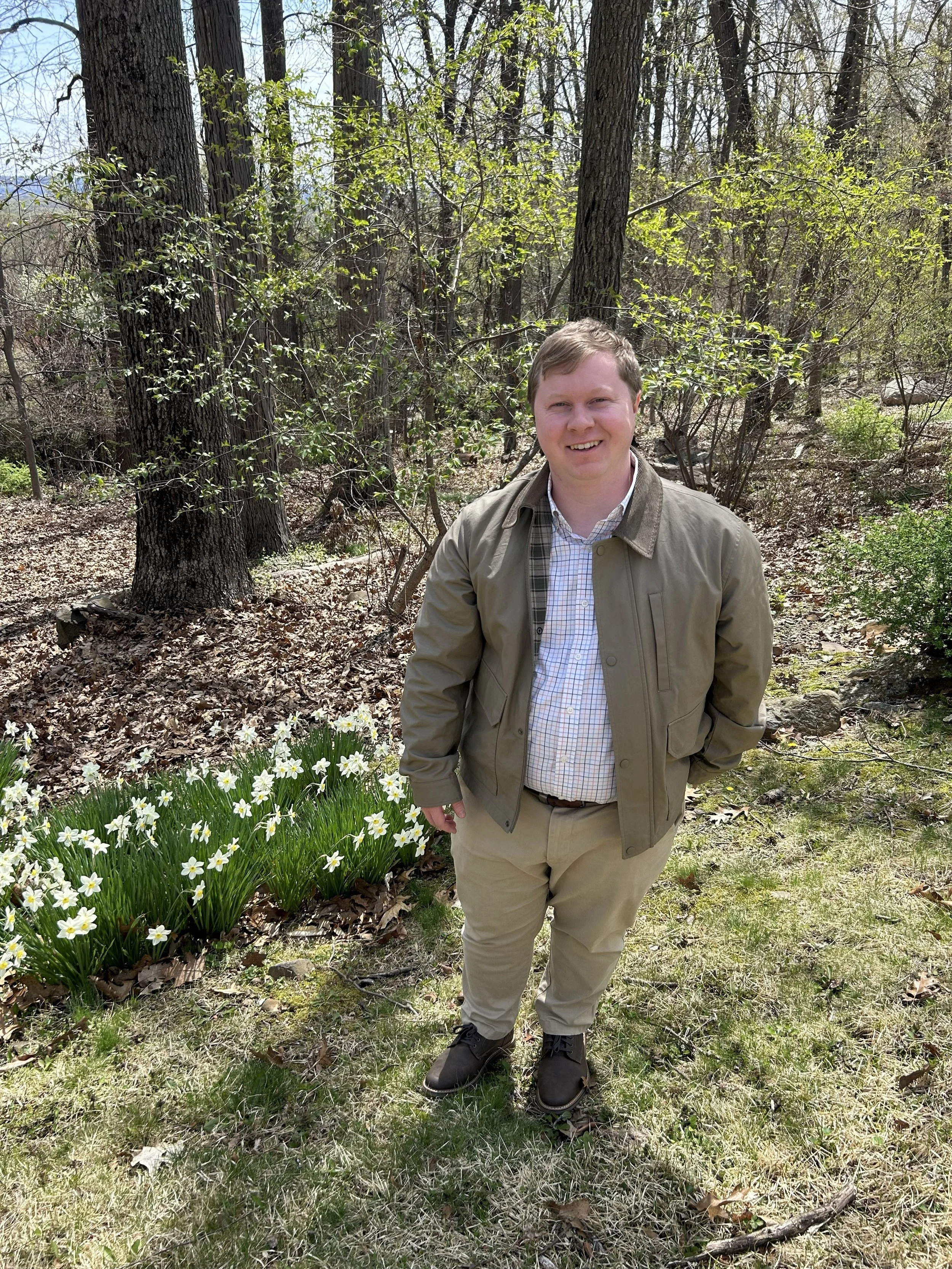
PJ Carmichael is a writer, artist, lover, and dreamer living in the seaside town of Beverly, Massachusetts. In his free time, he enjoys hiking, biking, and time spent outdoors. PJ loves his friends, family, and the feeling of summer sunshine. His writing has appeared in the Boston Hassle, Vagabond City, and elsewhere.
ARS EROTICA OR (A CUP ON A STRING) // MILES SIMON
He makes me little scarves for my ankles
they flap at the wind like hermes’ boots
One day I asked him never to touch me again
He makes me little scarves for my ankles
they flap at the wind like hermes’ boots
One day I asked him never to touch me again
He dragged a whole pine tree upstairs
for me, sap scratched into the wall
he spent weeks processing it
sawing and chiseling,
We sit for dinner,
chicken and flowers,
I get so close to taking the whole thing back
for months
all it would take is I can hardly feel anything that isn’t you
he excuses himself and the whirring sounds resume
He cuts long winding arms out of the pine’s stomach
and soaks them in wet cloth every day
soak and bend, soak and bend
so they can curve around the hallway’s corners
running under the rug like wires
down the hallway
from his workshop to my room.
He calls me upstairs to show me his progress:
I stand in the doorway to my room while he runs into his workshop.
From that workshop (where he sleeps now)
he pulls one thing and cranks another
and those long winding pine arms
extend out from under the rug, three of them.
They crawl blindly up the door
fumble with the knob
three thumbs
constricting with all their might
they pull tight under the rug like tendons raising in a wrist
and finally, turn it!
See?! See?!
the arms slide limp against the door
unpuppeted
as a chair screeches down the hall
he runs to me
but I hear the footsteps slow outside my room
as he remembers what I’ve asked
never again
his shadow almost kisses my feet
for a while he breathes
out of sight
Before he can finish the machine, the world catches up to us.
His mother leaves her famous chicken noodle soup
on medium overnight
to ash
somehow,
she chases away the fire department in her nightgown
but she can’t live alone anymore
so she moves in with us
a sheet goes over the machine,
even I forget about it for a while,
though each morning I step a little higher
than I’d need to
to not trip over the arms under the hallway rug.
He gets sick, as she dies.
Then she dies, and he’s still sick.
He makes it through work
gets home and just lays there
propped up in front of the tv
breathing through his oxygen mask
To save us
my addition to the machine isn’t nearly as
craftsmanly
I take thirty feet of string
(run it under my door and his door)
attach my end to a cup
and attach his end to the cup he’s already wearing around his mouth,
the oxygen mask,
and when I hold my cup to my ear
I hear hi darling and breathing
breathing
hear his throat peeling away,
that night I fall asleep to his workshop whirring
for the first time in so long
I’m reading,
feet tucked between the couch cushions,
wiggling them cozy
when I hear lips buzzing
the cup I rigged in the living room
come it’s done to your room it’s done
so I get into bed and wait.
I open my eyes to the door creaking open
dark
the machine ducks under the door frame
and the room fills with architecture
it walks now
stilted on the nubs of its pine arms
knees and elbows—dozens of them
it trails string behind it like a wedding veil
a wooden arm burrows into the gap between
my neck and the pillow,
And goes down my spine like a rolling pin
tenderly, like he can feel through it,
like he can collect
the sound
knocked from each vertebrae
in a cup at the end of a string
put it to his ear
and drink
when one rolling pin arm gets to my shoulders
another sneaks behind my head
rolls the same path
another, another
and by the time the first one rolls down to my calves
I am being lifted
the sheets slide down off me,
silk hangs from my feet
until I curl my toes and the sheets drop
in a deflating pile on the bed beneath me
higher I rise
as the conveyor belt of rolling pins continues their rhythm
down my back
The machine positions itself over me like a canopy
places four legs at the corners of the bed
something cranks
ker-chunk
and a cup on a string drops from a compartment above me
dangling,
I’ve heard oxygen masks will do that
on frightened airplanes.
I take the cup to my ear:
he asks me to help him
with my clothes.
No other words come through the cup
but one hand keeps it to my ear
to hear his breathing
as my other hand braces against
the leg of the machine I’ve decided to use
as a headboard
something to push against
as I make myself naked
I look up at the asymmetry of the machine
compartments droop
heavy with years of ideas
of how to touch me
martyr me
A compartment opens and
tiny whittled figurines jump out
they rappel down their strings
to land on my bare chest
One trips on a rib, and another points and laughs
(he does little nonsense voices for
them through the cup in my ear)
The ridiculed figurine sulks off down my stomach
it takes out a tiny wooden block and begins to read
her toes are just notches in her feet
she tucks those feet
into my bellybutton
the way I’ve tucked mine
into the couch cushions
for years.
she wiggles her toes cozy
that unique umbilical feeling
I am a lover no more
I am a stage
I am gaia
The figures bow, and
pull back into their compartment
I release the cup from my ear,
swaying on its string next to my head
I would hear if he spoke, but
no
there’s only breath from both of us
he leaves me to my silence
A wheel cranks, and squeaks
and through the door
carried into reach:
half a glass of water
with a smudge
Miles Simon is a writer based in Philly.
colophon // will cordeiro
I perch in a swayback chair
out on my porch, beaming
at the smear of stars above.
I perch in a swayback chair
out on my porch, beaming
at the smear of stars above.
They burn a void into my eyes.
A crookedness not in the air
but in the very grain of me,
anxiety I churn like butter.
Little riots back the brain.
I don’t know one damn thing.
Aimlessly I seek to understand
these words I’m rearranging,
an offering to otherness. No
end of secrets in the dark
woods. Match flare, lightning
bug—little spitfire suffering
its fug, its fleeting lit-up flicker
of consciousness. Brash spark.
A chorus of obscurer moods
descends. Soon, April blossoms
in its shapeless fecundation.
Things capable of quickening
thickening the plot until it veers
off course. I’ll take whatever
I scavenge from the bargain bins.
Each tidbit in this backlot of
mockups destined to be chewed
over and tossed aside. Existence
toggles, squirms, as more profuse
than the boxes we’d stuff it in.
Order’s the borders you make up,
putting labels on the rot and guff,
abducing theorems from each shard.
The world beyond this one’s not
a myth. It’s right beside—inside
you, if only you were able to see
its sharp eviscerating splendor bare,
or feel its texture wreck you, hard.
One fair sunset might just end you.
Only assorted fables will endure.
You live today, another day, a day
tipped over, then the produce
hits the cutting board.
Will Cordeiro has work published in 32 Poems, AGNI, Bennington Review, Pleiades, Quarterly West, and The Threepenny Review. Will is the author of Trap Street (Able Muse, 2021) and Whispering Gallery (DUMBO Press, 2024), as well as coauthor of Experimental Writing: A Writer’s Guide and Anthology (Bloomsbury, 2024) and, forthcoming, The New Foundations of Creative Writing (Bloomsbury, 2027). Will co-edits Eggtooth Editions and lives in Guadalajara, Mexico.
WHAT PRISON CHANGES // ACE BOGGESS
When I went in, women I knew were cat people;
at my release, each of them owned a dog.
When I went in, women I knew were cat people;
at my release, each of them owned a dog.
Before: video stores—a Blockbuster on every corner.
After: silent films among empty shelves.
As the deputy clasped shackles on my wrists,
I had a wife, a house, a city. No one
would publish my books without a rap sheet;
now, my list of crimes earns invitations.
I can’t get over the thing about cats & dogs.
The best friend of my best friend remains an enemy.
What happened to all the cats?
In five years, in that interim, an extinction.

Ace Boggess is author of eight books of poetry, most recently Tell Us How to Live (Fernwood Press, 2025), and the short-story collection Always One Mistake (Running Wild Press, 2026). His writing has appeared in Indiana Review, Michigan Quarterly Review, Hanging Loose, and other journals. An ex-con, he lives in Charleston, West Virginia, where he writes, watches Criterion films, and tries to stay out of trouble.
THE SHIFT // ANDREI ROMANOV
The rain started at six and hadn't stopped.
Not the clean rain of spring that washes the city and makes the streets smell like wet stone and something almost hopeful.
The rain started at six and hadn't stopped.
Not the clean rain of spring that washes the city and makes the streets smell like wet stone and something almost hopeful. This was December rain—cold, diagonal, personal. The kind that found the gap between your collar and your neck and stayed there like a grievance.
Marius clipped his phone to the handlebar mount and waited for the app to connect. The screen pulsed blue, then white, then settled into the familiar interface: a map of the city with his location marked by a small circle, pulsing gently, as though the app could feel his heartbeat. It couldn't. The app could feel nothing. That was the point of the app.
Driver 4471 is online.
Shift begins: 07:00.
Estimated shift end: 19:00.
Current rating: 4.6 stars.
The 4.6 was a problem. Below 4.5, the algorithm throttled your orders with fewer pings, longer waits, the slow strangulation of income disguised as mathematics. He'd dropped from 4.8 last month after three bad ratings in a row. One reason was that he rang the wrong doorbell. One was because the restaurant had forgotten the drinks, and the customer held him responsible, as though he had packed the bag himself, as though he had hands inside that kitchen. The third rating came with no explanation—just two stars and silence. The app didn't require customers to explain why a human being was worth two stars. The app only required the number.
He swung his leg over the bicycle and felt his right knee object a dull, wet protest, the cartilage grinding like a hinge that needed oil: one more morning, one more shift. Every part of him wanted to be anywhere else, but there was nowhere else to go. Weariness pressed against him almost as heavily as the rain, a bone-deep ache that could never quite be shaken off or ignored. He reminded himself that twelve hours might be enough, that maybe today he would keep his rating high, that something might shift, even if he didn't really believe it. But he pushed off anyway, the habit stronger than hope. The knee had been bad since the factory. Twenty-three years on a production line, standing on concrete for ten-hour shifts, assembling parts for machines whose purpose he was never told. The factory made components for components. He was a component too. Then the factory closed, and the components were no longer needed, neither the mechanical ones nor the human ones. The letter said "restructuring." The letter did not say what would be structured in its place.
He pedaled into the rain.
Delivery 1. Order #4471-0623. Rua da Liberdade, 14, 7th floor.
The building had a glass lobby and a doorman who looked at Marius the way people look at rain as something that happens to the outside of their lives.
“Delivery. Seventh floor.”
“You can leave it here.”
“The app says hand-deliver.”
The doorman waved him toward the elevator with the enthusiasm of a man waving away a fly. The elevator was mirrored on three sides. Marius saw himself as a wet man in a green jacket carrying a thermal bag, replicated into infinity. An army of delivery drivers, all of them him, all of them wet, none of them visible to anyone who lived above the fourth floor.
The door on the seventh floor opened before he knocked. A man in a grey bathrobe, phone pressed between his ear and shoulder, gestured at the console table in the hallway. Marius placed the bag down. The bag contained two açaí bowls, one flat white with oat milk, and a bottle of kombucha. The order total was €34.50. Marius would earn €3.20 for this delivery. The man continued his phone conversation, something about a quarterly review, something about margins.
He did not look at Marius. Not out of cruelty. Out of architecture. His life was designed so that certain people, the ones who cleaned, who delivered, who maintained, existed below the threshold of sight. They were infrastructure. You don't make eye contact with a pipe.
Marius waited three seconds in case a tip was coming. No tip came. He pressed “Delivered” on the app. The app asked: Was the customer available? Yes. Was the delivery completed successfully? Yes. The app did not ask: Did the customer acknowledge your existence? The app didn't have a field for that.
Back in the elevator, the mirrored walls showed the army of delivery drivers descending. All of them were tired. All of them have bad knees. All of them are worth €3.20.
Delivery 2. Order #4471-0641. Rua de São Tomé, 88, 3rd floor.
The buzzer didn't work. He called the number on the order. A young male voice answered, apologetic, slightly stoned.
“Just push the door, man; it's broken.”
The stairwell smelled like damp concrete and cooking oil. Third floor. The door opened onto four faces in a room designed for one. Two mattresses on the floor, a desk covered in textbooks, a guitar leaning against a radiator that wasn't on. Students. They looked at the delivery bag the way castaways look at a ship.
“Legend. Thank you, man.”
They'd ordered one large pizza, the cheapest on the menu, and a two-liter bottle of store-brand cola. Total: €11.90 split four ways. €2.97 each. Marius knew what €2.97 meant. It meant this was the meal, the only one today that hadn't come from a packet of instant noodles.
One of them, a girl with glasses and a hoodie two sizes too large, held out her phone. “How much can I tip on this thing?”
“Whatever you want.”
She tapped the screen. Two euros. She looked at him with the particular expression of someone who knows that two euros is both everything she can spare and nothing compared to what he deserves. He recognized the expression. He'd worn it himself.
“Thank you,” he said, and meant it in a way the app would never quantify.
Outside, the rain had thickened. His phone pinged. The next order was 4.2 kilometers away. The app calculated the route. The app did not calculate the wind, the rain, the knee, or the fact that Marius was fifty-eight years old, and the city was designed for people half his age on machines twice as fast.
He pedaled.
Delivery 3. Order #4471-0657. Avenida da República, 202, ground floor.
The woman who opened the door was holding a baby in one arm and blocking a toddler with her leg, the way goalkeepers block shots instinctively, without looking, the geometry of motherhood calculated in the body.
“Oh, thank God. Come in, I mean, sorry, you don't have to come in. Just hold on.”
She shifted the baby to her other arm, grabbed the toddler by the back of his shirt, and took the bag with three fingers. Behind her, the apartment looked like a storm had passed through it: toys on the floor, a basket of unfolded laundry, a television playing a cartoon that no one was watching. The kitchen counter was covered in baby bottles in various stages of assembly.
She'd ordered a salad and a soup. Twelve euros. The cheapest meal that could be called a meal.
“How much do I owe you? Wait, I already paid on the app, right?”
“Yes, it's all paid.”
“Right. Right. Sorry. I haven't slept. How do I tip? Is it on the app?”
“There's an option after you confirm delivery.”
She looked at him. Really looked. Not at the uniform, not at the thermal bag, not at the green jacket that said FOOD SPRINT on the back. At him.
“Are you okay? You're soaked.”
He almost couldn't answer. Not because the question was difficult, but because it had been asked. Nobody had asked if he was okay in so long that the question arrived in his chest before it arrived in his brain.
“I'm fine. Enjoy your meal.”
She tipped five euros. He knew she couldn't afford it. He knew because of the laundry basket and the soup and the way she'd said “oh, thank God” not as an expression but as a prayer. She was spending money she didn't have on a stranger because she understood something about standing in the rain that the man on the seventh floor would never understand.
He wanted to refuse it. He wanted to say, “Keep it, you need it more than I do.” But he didn't, because that would be charity running in the wrong direction, and the one thing he still had, the one thing the app and the rain and the knee hadn't taken, was the discipline not to patronize another person's generosity.
He pressed “Delivered.” He rode on.
Delivery 4. Order #4471-0672. Residência São José (Care Home), Rua dos Anjos, 15.
The receptionist was behind a plexiglass screen, the kind installed during the pandemic and never removed, as though the building had decided that distance between people was now permanent architecture.
“Delivery for Room 14.”
“Leave it here. I'll take it up.”
“Can I take it up myself?”
“Policy. External visitors aren't permitted beyond reception.”
He put the bag on the counter. The order was a single portion of caldo verde and a bread roll. Seven euros. He imagined Room 14. He didn't have to imagine hard. A bed. A television. A window that looked onto a courtyard or a wall. A person old enough to be his mother, sitting in a chair, waiting for a plastic bag of soup delivered by a stranger, the system called Driver 4471.
He wondered if the person in Room 14 had someone who called on Sundays. He wondered if the person in Room 14 had chosen the soup themselves, scrolling through the app with fingers that remembered a time when food came from a kitchen and was served by someone who knew your name.
“Could you tell them, could you just say the delivery person says hello?”
The receptionist looked at him. A pause. Something human flickered behind the plexiglass.
“I'll tell them.”
She wouldn't. He knew she wouldn't. But the asking mattered. The asking was the last gesture available to a man who was not permitted beyond reception.
Delivery 5. Order #4471-0698. Rua da Graça, 44, 2nd floor.
His own street. He knew it the moment the address appeared on the screen. He had walked past number 44 every day for three years. The building's front door was identical to his own, with the same faded blue paint, the same broken intercom, the same row of dented mailboxes in the hall. Number 44 was directly below his own apartment. His downstairs neighbor. They had never spoken.
He climbed the stairs; he climbed every night. Second floor instead of third. Same tiles, same smell of bleach and age, same fluorescent light buzzing like an insect trapped behind the ceiling.
He knocked.
The door opened.
A man his age. Maybe younger, maybe older, the ages blur when life has sanded you down to the same surface. The man was wearing a shirt he'd worn to work that morning, now untucked, the posture of a body that had been upright for ten hours and was finished. Behind him, a television and a single plate on a small table. Dinner for one.
The man looked at the bag. Then at the uniform. Then at Marius's face. Recognition not of a name or a history, but of a condition. The recognition of two people standing on opposite sides of a door, understanding that the door is the only difference between them. On a different day, in a different algorithm, the positions would be reversed.
“Thank you,” the neighbor said.
“You're welcome,” Marius said.
The door closed.
Marius stood on the landing for a moment. His own apartment was one flight up. Twelve steps. He could hear the hum of his own refrigerator through the ceiling, a refrigerator he knew was nearly empty because he hadn't gone shopping this week. After all, shopping required choosing between food and the electricity bill, and the electricity bill was due on Friday. Today was Wednesday, and the mathematics of Wednesday-to-Friday was a corridor he walked every month with his eyes closed.
He climbed the stairs. He opened his door. He didn't turn on the light.
19:07.
He sat on the edge of the bed. The rain had stopped. His jacket dripped onto the floor, forming a small puddle that reflected the glow of his phone screen. His knee throbbed with the particular insistence of a body part reminding you that it has been ignored and will not be ignored much longer.
He peeled off his wet socks. He hung the jacket over the bathroom door. He opened the fridge. A half-empty bottle of water, two eggs, and a jar of something he should have thrown out last week. He closed the fridge.
His phone buzzed.
The app displayed his shift summary with the cheerful efficiency of a system that does not understand exhaustion:
Shift complete.
Duration: 12 hours, 7 minutes.
Deliveries: 23.
Distance: 47.3 km.
Earnings: €68.40.
Tips: €11.50.
Total: €79.90.
Average customer rating received: 4.7 ★
He stared at the numbers. Twelve hours. Forty-seven kilometers. In the rain. On a bicycle. With a knee that needed a doctor he couldn't afford to see. After all, the app didn't offer health insurance because it didn't employ him, and it maintained, with legal precision, that he was not an employee but an “independent contractor,” which meant he was free. Free to work twelve hours in the rain. Free to earn €68.40. Free to have a knee that would eventually fail and a system that would replace him the way the factory had replaced him, with a paragraph about restructuring and a silence where a pension should have been.
€68.40 divided by 12 hours was €5.70 per hour.
Minimum wage was €5.85.
He earned less than minimum wage, but technically, he wasn't earning a wage at all. He was earning “delivery fees.” The distinction was legal. The distinction was the difference between a worker with rights and a man on a bicycle with a phone mount. The distinction was worth billions to the company that made the app. The distinction was worth nothing to him.
The phone buzzed again.
Great work today, Driver 4471!
Ready for tomorrow?
[Schedule Next Shift]
The button was green. Bright green. The green of go, of growth, of money. The green of a traffic light that never turns red because the app doesn't believe in stopping.
Beneath the green button, there was nothing. No second option. No “I need a day off.” No, “My knee is failing.” No, “I am fifty-eight years old, and I used to build things with my hands, and now I carry other people's meals through the rain, and I am tired in a way that sleep does not fix.” There was no button for any of that.
There was only the green button.
He pressed it.
Not because he wanted to. Not because he believed tomorrow would be different. Because the app had designed a world with only one option and called it freedom.
He put the phone on the nightstand. The screen glowed for a moment, the city map, his location marked by a small pulsing circle, then went dark.
The apartment was quiet. The fridge hummed. The jacket dripped. Below him, through the floor, he could hear his neighbor, the man who had opened the door and recognized him, the man who ate dinner alone at a small table, watching television. The sound was faint, just the murmur of human voices. Marius lay on his bed in the dark and listened to it the way a sailor listens to the sea: not because it offers comfort, but because it confirms that the world outside is still there, still moving, still making sounds that prove someone, somewhere, is still awake.
Tomorrow, he would be Driver 4471 again.
Tonight, he was Marius.
He closed his eyes. The green button pulsed behind his eyelids like a second heartbeat, steady and patient and permanent, asking the only question the system knew how to ask, the question that was not really a question at all:
Ready?

Andrei Romanov is a Romanian-born writer and independent historian based in Portugal. He is the author of Masters of the Ocean Sea (2026), winner of the London Book Festival Award for General Nonfiction and the Pacific Book Award for Best Biography. His work is held in the permanent collections of the British Library, the Cambridge University Library, the National Maritime Museum (Greenwich), and The Mariners' Museum (USA). His creative work appears or is forthcoming in Thin Places Literary Journal, Wordpeace, The Markaz Review, and Quibble Lit.
incubation // Ola Rydzewska
I walk up the stairs towards my flat. The staircase is cool, but the wooden handrail feels warm in my palm as I grip, pull, and then shuffle my hand upwards with each step.
Week Twelve
I walk up the stairs towards my flat. The staircase is cool, but the wooden handrail feels warm in my palm as I grip, pull, and then shuffle my hand upwards with each step. Large windows overlook the landings between each floor. On the second one, I stop to rest. My fingertips touch a green pane of cathedral glass, and it feels like unsettled water. Over the years, colorful offcuts have replaced the original glass.
On each landing, I inspect the plants: first, a fern, then a ficus, a peace lily, a satin vine. They live in pots made out of plastic bottle halves. The brown and black soil mingles with pale yellow roots, tangled and unruly, and they push against the clear walls of the incubator. Below each black stone windowsill, a radiator, and next to the radiators, small watering cans. I use one to water the peace lily, hoping to revive it despite the weak autumn sun.
When I finally reach the fifth floor, I’m out of breath. My fingers throb, hot and swollen, as I unlock the door, squeeze into the shared hallway, and then struggle with my front door. This body feels heavy and, once inside, I sit down on a stool in the narrow corridor. Strangely, the pregnancy has made my muscles feel drained, and I’ve developed a generalized feeling of fatigue.
From the semi-darkness of the corridor, I look into the living room and watch the last rays of sun moving through the net curtains. I rest, too lazy to take off my coat. Sweat builds up on my upper lip and my underarms itch. Through the clothes, I touch my stomach. It feels hard, rigid and lumpy. I try the exercise the doctor gave me and begin to massage it in circular motions. I imagine what my baby might be doing now, twisting and kicking, drinking the fluids.
I walk into the kitchen and approach the new cabinet squeezed into my dated setup between the sink and the table. It’s white and covered in bright, reflective stickers. Warnings and instructions, temperature gauges and pressure sensors. It has a chart with ticks and crosses, for every visit, phone call and measurement. I move slowly, still hot in my coat, my glasses foggy from the humidity in the room.
I think about my mother.
We are watching TV, and I’m fourteen. On the news, they announce one of these new machines. She snorts and shakes her head, looks at me worried, as if she knew that the machine would stand in her kitchen one day. Though it’s no longer her flat, every time I open the machine I hear her voice admonishing: green fingers, greener brain.
My baby is inside the machine, healthy and growing.
Today, I’ve been wearing my pregnancy suit, and I went to see the photographer. Luckily, he was a man and not interested in feeling the baby kick. The photos will be a nice souvenir for her. An important memory. Though of course, the model of the machine will be listed in the birth records.
As I undress and remove the heavy pregnancy suit, I look around the living room. The pictures on the walls remain the same as when my mother was alive: a rabbit embroidered by my grandmother, a black-and-white photograph of my great-grandparents’ wedding, a broken cuckoo clock, two dusty chains dangling down from it. She would find no complaints, no changes, no imprint of me except for a few fashion and pregnancy magazines scattered on the heavy-handed coffee table.
In the bedroom, I put on my pajamas and look at my mother in a small mirror.
Before I head to bed, the baby needs tending, so I check the tubes and the fluid containers under the sink. It all seems to be flowing well. They say you should keep a nose out for strange smells, usually the first sign that the mechanics are breaking down. Tonight the kitchen smells clean and dry.
I take a quick peek inside to see you floating in the artificial womb bag, suspended from a chrome hook. There. You’re real. You’re a shadow of a person, fainter than a memory.
Week Twenty-One
I take the blue tram to work. The ride is bumpy, and the cold November wind whistles through gaps where the window seals have given way. I can feel the faint cold stream on my cheeks, but my wool coat keeps me warm. The weather is always an issue: frozen, humid winters and dry summers, cold sweats and salty cankles. As I look out at the passing city, I can see it’s locked up, and people are gestating indoors until the New Year in March.
When I arrive at the Institute office, the other girls are already at their drawing tables. I’m five minutes late. I check my card, and someone has punched me in, so I hang up my coat and rush to my station.
The technical drawings have been particularly tricky these past few months.
When working on an extensive Children’s Complex like this one, we usually follow the master plans from the central office, perhaps moving a bench here or there to account for the local topography. This one is different. It started with flipping the design back to front, to adjust for the hilly terrain. Then, more and more additions started to appear on sticky notes and memo cards. We found annotations and directions, adjustments, or ripped-up designs. A job that should have taken us two weeks has now been going on for months. The boss had never been this creative before.
Today, during tea break, we gossip about the fathers’ room idea he has added in, mostly because we don’t know any men who would want to use one. We giggle and laugh, trying to suppress the noise, so much so that our cups jiggle and clink against the saucers.
Back at my desk, I look out at the inner courtyard and gardens, which are surrounded by the concrete structure of our Institute. Though the building is tall, it looks squat as it stretches for hundreds of meters in a snail-like spiral. I watch the office dioramas on the other side, follow people’s tiny movements as they go on with their typing and filing. Someone looks back at me, but I don’t recognize her.
The vast spaces of the Institute can make you feel vulnerable and exposed. Sounds bounce like unstoppable ping-pong balls along the vast tiled corridors, and I feel far from my soft, cramped flat.
***
In the afternoon, when the rain stops, the boss’s wife comes into the office. She makes herself a cup of coffee and walks around the workshop floor, looking at our drawings, asking questions. I think she must be lonely lately; she’s been coming in more often.
A new maternity dress adorns her swollen belly and then flows steadily towards her ankles. I recognize the pattern she’s wearing; the same one is sitting on my bedside table. She looks very beautiful, very glowing, very edible.
We chat a little, and she tells me she’s been giving her husband ideas for the Children’s Complex. She smiles shyly and says it casually, but I can tell she cares because she scans the schema on my desk to see if any of her suggestions have made it onto the plans. It seems to me that she is too emotionally connected to her ideas, not rigorous enough. People have many ideas, but not many of them would make for an efficient life. When the boss comes out to chat to her, I can see the same softness in his eyes and realize that the project will continue for much longer.
As they walk off together, the wife turns back to me and says, “I’m sorry, I hear you’re expecting too. Husband told me your date, and it’s close to mine.” She smiles. “Though of course, yours is set. Must be nice to know.” I smile back. She seems excited. We’re both smiling at each other for a few seconds. My stomach stirs uncomfortably.
Week Thirty
Cavern of my heart, my precious stone, how I watch my baby grow. I can’t feel you, but I can see every tiny detail, as your fingernails start to appear and you develop sweet elbows. You’ve been a world onto yourself from the beginning.
Now that she’s bigger, quite big, like a papaya, I have more work to do. The door is allowed to stay open longer, so that I can make notes and even take photos. I have them developed at the other end of town, where they won’t care who I am as long as I leave a nice tip. Some studios still take issue, call it interfering with biology or god’s plan. They say that it’s not natural, with that annoying emphasis which makes me want to smack them.
I’ve tried to make sketches, too, and descriptions, in case you want to find out in the future what it was like. Though maybe you won’t like that.
When I was a small girl, people would get angry about different things too, things that seem pretty normal, so normal they are natural. In the school yard they used to call out after me: test-tube baby. So, I thought I had grown in a tall glass container, long and slim, my face squashed against the clear glass, uncomfortable but adapting.
I water you, check the pipes and the levels on the gauge. I refresh the chemicals in the purifying box, say a few words of encouragement, of superstition, add salt. I pour water into the tank with the red label, to be cleansed. I look at it swooshing around, sucked from the bottom into the filter. I’m still leaning over the tank, between the kitchen table and the fridge, my shoulders jammed in and my hair hanging down over my face. Gravity builds up saliva in my mouth, first pressing against my teeth, then steadily seeping through to my loosely held lips. Spit slowly oozes out of my mouth, long and stringy, until it gains momentum and drips into the opening below.
I anxiously wonder if some of me will reach you.
***
A few days later, I’m running errands at the shopping center when I see my boss’s wife again. We walk around together, though she doesn’t know that. I’m a few steps behind, looking at her through glass shop corners and between chrome pillars. Loud announcements bounce around the center, and I hope to stay hidden in the noise. My grey coat blends in with the marbles and the metals. Wearing my pregnancy suit, I imitate her walk, the cadence of her legs as she moves. Today, she seems uncomfortable, heavier, laborious, and very unlike herself at the office. I allow myself to feel uncomfortable; I curse my heels when I see her flat, misshapen boots, and I feel tricked and relieved.
After a while, she goes out front and grabs a taxi. I walk over to the bus stop.
My pregnancy suit is filling up. Each week I add a small wheat bag to the front pouch. Sometimes I warm the pouches up in the oven for a relaxing sensation on my abdomen.
Week Forty
Birth is scheduled for Wednesday, so on Tuesday after work I make the necessary preparations. I rewatch the educational tape one more time, though each step is already ingrained in my mind like a lively parasite. As I play through the middle section, where the new baby slides out of the sack, the image flickers and stretches, red and purple aberrations mar his small face. The tape is stretched out. It would seem I’m not the only one who has rewatched this section over, and over, and over.
A film night with some friends in high school comes to mind. I remember leaning in to push the tape into the VHS player, so close to the TV that the static grabbed my hair and pulled it towards the screen. Giddy for a female-friendly adventure film, my friends were close behind me.
An image. A woman’s frightened face. A man wearing a white face mask. A big belly and unrecognizable body parts and red blood.
After a few seconds, we realized that someone must have swapped stickers on the black plastic casing of the videotape and returned it to the rental store. It was a woman giving birth.
We watched the film, fascinated. The baby came out with a scream, a scream of the mother, and then, as if infected, the child screamed too. We were frightened, and when I looked around the room, I could see tears wetting my friends’ cheeks, the same wetness on my face.
I don’t believe my baby will cry when she’s born; at least she shouldn’t, according to the instructions. She will enter my world happier, content, peaceful.
***
On birth day morning, I warm up the flat with an oil heater so that her transition is as gentle as possible. Spring has begun, and dust swirls in sunlight. When I look around the living room, it suddenly feels dirty and oppressive. I get the vacuum out of the cupboard and run it around the flat, aggressively bashing into table legs and the settee, but all I seem to achieve is more dust rising into the stuffy atmosphere.
The narrow corridor, the long living room, the matchbox bedroom, all conspire against me. Despite months of preparation, I failed to transform this space into something beautiful and new that would be worthy of my baby. And now there is no time to get rid of the garlic smell, to get a nicer brand of soap.
The midwife arrives just in time to save me from descending into insanity.
She’s reassuringly process-focused and follows the script from the video with no deviation. I surrender to the motions and, even in my tight kitchen, we deliver my beautiful baby. She is serene. I cut the umbilical cord. The midwife hands her to me wrapped in a soft cloth.
The three of us are quiet as we sit on the settee during the two-hour watching period. A stack of pamphlets and notebooks has appeared on the table. She must have laid them out when I was distracted doing the first feed—reassuring instructions for a bright future.
***
She is in bed now, and we’re home alone. The kitchen floor is messy and wet, so I mop it with detergent. I latch the door of the machine, ready to be taken away and sterilized. I pull the plug, and the artificial womb whizzes to a halt.
Silence, for the first time in months. My eardrums rest, and then, a scream.
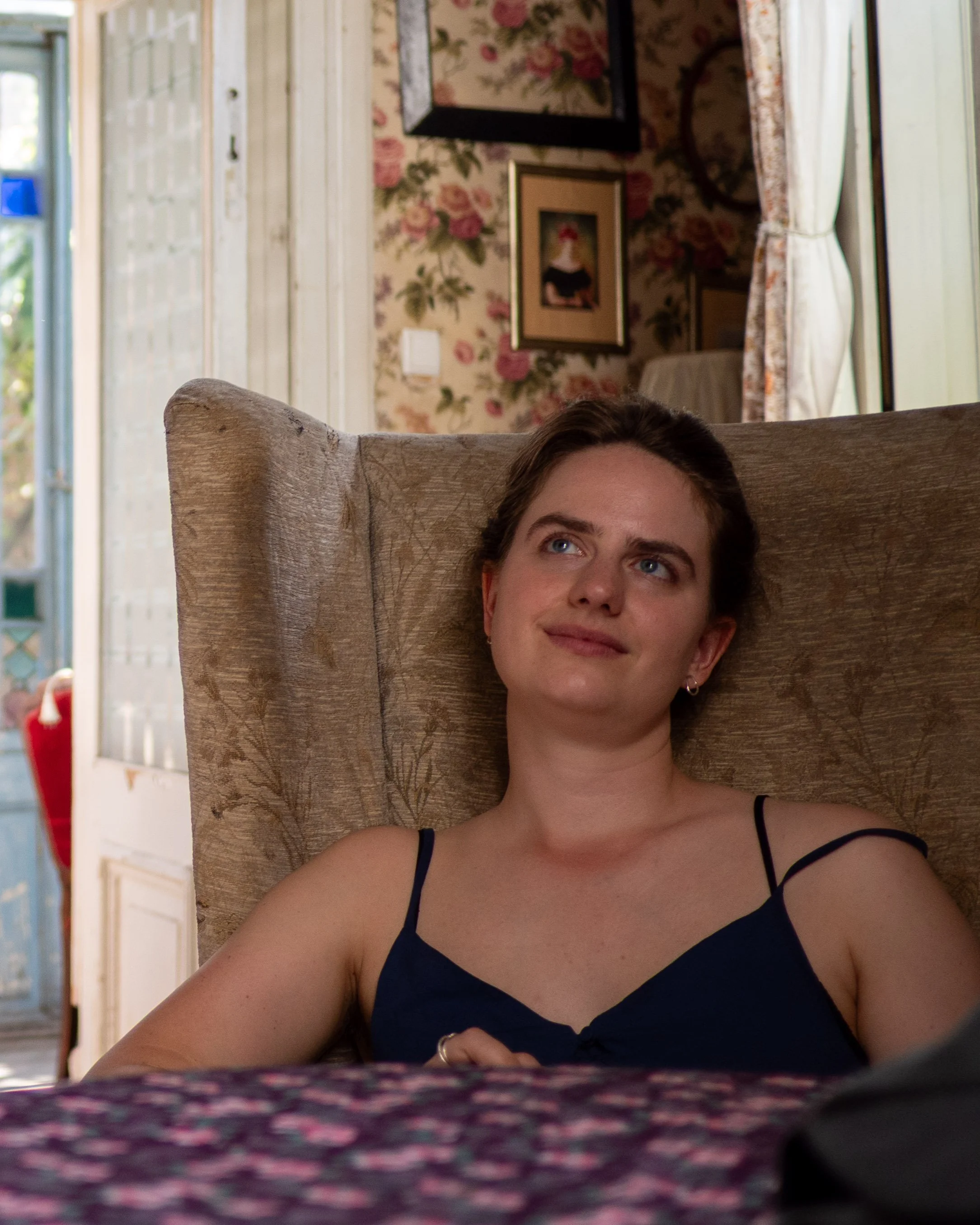
Ola Rydzewska is a writer living in London. She grew up in Poland and in Wales, and you might spot hints of that in her writing.
the family // emily white
Ruin is not good at drawing cathedrals, and that hasn’t been a problem in their life until now.
Ruin is not good at drawing cathedrals, and that hasn’t been a problem in their life until now.
They’re sitting at the kitchen table, staring at a piece of paper folded in half, blank other than the smudge in the corner where a spider tried to make a crossing. To their left, a box of crayons open and mocking. All those bright colors are fun but not helpful in capturing the melancholy shades of an old stone church.
This was the brief from their father: Your half-sister is turning 13; it’s time you two met. Useless bastard couldn’t name her favorite animal but was pretty sure she was into Gothic architecture.
So, Ruin is making a birthday card for this girl about whom they know nothing, with whom they share nothing—other than a parent. An attempt is being made to forge some kind of connection via a handmade gift. When kids do it, it’s cute. Ruin is hoping the same standards will apply to a well-meaning almost-adult.
Ruin walked all the way to the local newsagent to get a real card. They stood in front of the racks for several minutes and thought about spending several dollars on something this spoilt child would throw away after a day or two.
A handmade card is personal but not extravagant. It says, I used my hands for this; it’s covered in my germs. The perfect gift for the offspring of your dad’s secret second family that you only found out about recently because someone leaked the details of your mum’s (also secret) civil lawsuit against him online and the local news ran a story about it because nothing else interesting happens in your town and someone at your school saw it on TV and then told you about it the next day in front of everyone.
A handmade card is a gesture. It says, I’m not bitter. I used the good paper.
The wooden chair squeaks with every shift of weight. It’s older than Ruin, just like the table on which they’re currently leaning, head in hands. Ruin’s parents bought the dining set from the Good Sammie’s one suburb over for a few bucks and—as the legend goes—carried it all home themselves in one trip.
A thump at the window rattles the glass and Ruin’s shoulders. They look behind them in time to see the grey mess of feathers take off again. Then from the table their phone bursts into song, signifying ten minutes to get out the door if they want to make the train on time. Which they don’t want. But they should.
Ruin curses and leans over to bang their head once on the table. That leaves another smudge on the paper. Nothing says sibling bonding like forehead oil.
Taking up the black crayon, they draw a house—who are they kidding, it’s a square with a triangle hat. Then the red crayon marks a crucifix on the roof. Not exactly the Duomo di Milano, but the idea is there.
In the bathroom, Ruin brushes their teeth while on the toilet and feels like a genius. Then, in the rush to pull up pants, flush, and spit out toothpaste all in one, they manage to drop their toothbrush in the bowl.
If only there was time to scream.
Ruin doesn’t say goodbye as they leave. They’re not sure if their mother is home. They make it to the train station with three minutes to spare. This is Ruin’s favorite amount of time to have spare when catching the train. At least something has gone right today.
The train pulls into the station, then out again.
Two trains and a bus are not the reason Ruin has never visited “Dad’s new pad”—as their mum calls it. Although it certainly is sour to know that this short lunch date will be eating most of Ruin’s Sunday.
It is rare for Ruin to find themself north of the river at all. Everything out the window looks foreign. The bins in front of the houses have different colored lids.
Within the confines of the carriage, the people feel unfamiliar, too. All the clothing looks so bland yet so expensive yet so outdated. One man is wearing a long brownish-purple robe. It’s got the big bell sleeves and everything. If it was tied around his waist with a cord, he would look like a monk. As it is open over chinos and a polo shirt, he just looks like a dag.
The train stops at an empty station. Ruin watches a crow pull a chip packet out of a bin and use it to frighten off a pigeon. The sun reflects off the crinkled foil, through the train window, into Ruin’s face. Ruin closes their eyes and counts to a thousand.
Stepping off the train, Ruin spots a second robe and wonders if there’s some kind of convention today. The increased proximity to their dad’s house is matched by an increasingly irate inner voice questioning why they ever agreed to do this. Except they know why—it was the easiest way to piss off their mum.
#
Ruin hovers in the hallway while Arthur introduces his wife, Cathleen, and his daughter, Jessica. When Ruin repeats the names back, they both correct, “Just Cath,” and “Just Jess.” This must be what it feels like to die.
They are ushered into the front living room. The way Cath specifies front, suggesting there is a back living room, makes Ruin’s scalp itch. They give the card to Jess, and time stops. Ruin has to swallow a little bit of vomit when she opens it to reveal… nothing. They forgot to write in the damn thing.
So much for making a gesture.
“Thanks. I wasn’t sick, though.” Jess cocks her head to the side as she closes the card again, trying to figure out the joke.
The joke is that Ruin has been here for two minutes and is really wishing they had followed that guy to the wizard convention.
“It’s not supposed to be a hospital. Dad said you were into Gothic architecture, so I thought… cathedrals are vaguely related to that.” Ruin looks to their dad for reassurance, support, a terrible pun, anything. He’s on his phone.
Cath asks if Ruin would like a cup of tea and then leaves the front living room without waiting for an answer. She’s gone for seven minutes, during which time no one speaks. Bangs and clangs echo down the hallway, mingling with birdsong from outside.
Ruin wades deeper into the room and perches on the edge of a cream-colored leather couch. The walls are exposed brick painted white. There is one bookshelf. It has glass doors to prevent the books from escaping.
The house is very long, but this room sticks out to the side like an elbow. Out the window into a backyard that runs parallel to the rest of the house, there are more bricks, and beyond that some dead grass. There is a barbecue, and next to that a large metal structure. Ruin realizes with a start that it’s a birdcage. A huge rectangular enclosure like you might see at the zoo. There are several different sizes and colors in there, flitting about or preening themselves.
Ruin’s palms are sweaty. There is a padlock on the cage door. There is a padlock on the front living room window. There is a padlock on the glass-doored bookshelf. Ruin can see their reflection, sort of, like inky water. They try to sit up straight.
Cath returns and puts an unnecessarily large mug of milky tea in Ruin’s hand. The eye contact could also be described as large, unnecessary, and milky, as she says, “Here you go, Ruin.”
Jess looks up from her continued inspection of the card. She is sitting feet up on the other end of the L-shaped couch. “Ruin? I thought your name was—”
“Whoa, is that the time? We’d better get going.” Arthur stands, pushes his belly out, and hikes his shorts up beneath his robe. He’s wearing the same brown robe as the guy on the train. Ruin double-takes so hard a splash of tea burns their hand. Was he wearing that this whole time? If this is some ploy from their father to distract from the fact that he’s clearly been deadnaming his oldest child behind their back, it’s working.
There’s a flurry of brown wool as Jess and Cath get up and don matching robes.
“Are—are we going to that convention?”
No one acknowledges that Ruin has spoken. Jess is now by the door putting on shoes. Are those Ruin’s old shoes? No, that wouldn’t make sense. She flicks her hair back, causing the robe to slide down her shoulder. It’s too big for her, and she’s used to it.
Maybe Ruin had a rage-induced stroke when they dropped their toothbrush in the toilet. That’s the only explanation they can come up with for what they’re seeing.
Either that, or this family has joined a cult.
Ruin supposes they shouldn’t say, “joined,” as if it happened recently, since they know pretty much diddly-squat about these people. They could have always been in a cult. It wouldn’t be the biggest thing their dad has kept secret.
“Sorry we ran out of time for lunch, kiddo. Maybe next time.” Arthur joins Jess by the door, but Cath gasps and points at Ruin, still sitting wide-eyed on the couch.
“Oh no! You haven’t had a chance to drink your tea!”
Ruin takes a sip to be polite and looks for a surface on which to abandon the beverage. Warmth travels down Ruin’s throat. Cath joins the others by the door. All three stand together in family portrait formation. Arthur’s hairy hand on his daughter’s shoulder. Three sets of eyes stare. Three sets of teeth smile.
Ruin takes another sip. Cath gives a noise of encouragement.
Honestly, Arthur forgetting about lunch and making other plans is the best possible outcome. Ruin doesn’t care if they’re not included in those plans. They look at the locked window, at the blocked doorway. They don’t know what kind of tea this is. It doesn’t taste like anything.
They keep drinking.
Seeing no other option, they keep the mug pressed to their lips, watched by three strangers, as if it is the polite thing to do. A dribble of fluid snakes down Ruin’s chin, but they keep going, looking cross-eyed into the ceramic cavern to see it’s barely half empty. The school counselor’s voice echoes in their mind, asking if they know what a pessimist is, and then explaining it at length even after Ruin said yes, they know what it means, thank you.
They feel full. They want to shut their eyes again and count down the seconds until it’s over, but the darkness in the mug holds their gaze. There’s a gentle pat, pat, as droplets fall from their chin onto the beige carpet. There is no other sound in the room aside from that and the rhythmic glug of Ruin’s throat.
The birds outside have fallen silent. Ruin’s eyes dart left to look out the window but can only see the grey outline of the cage.
There is movement in the mug. Like a muddy beast rising from a bog, there is something alive where there shouldn’t be. Ruin falls into the gaping maw of the monster, and tumbles headfirst down the eternal esophagus where they can’t scream; they can only swallow and swallow and—
Suddenly they’re spluttering, startled by a warm wet weight that smacks their nostrils. Thankfully there is nothing left to spill. They have finished, revealing the teabag previously hidden by opaque liquid. Dropped in by accident, except the string is wrapped so tightly around it. Ruin wants to call their mother to come get them.
When Ruin swallows any further coughs and wipes a hand over their chin, Cath does a single clap to convey that she is pleased.
Ruin flinches as Cath crosses the room to take the cup, then puts something else in their hand. It’s a flat rectangular package, wrapped in paper the same maroon color as the robes.
“I know it’s Jess’s birthday, but we got a little present for you as well. You can open it when you get home.”
Once again there’s no waiting for consent or dissent when a lift to the station is offered, since apparently that’s where they’re all going anyway. The family gets on a train continuing north while Ruin crosses to the opposite platform to head back into the city.
By the time they get there, they need to pee so badly they miss the connecting train to look for a toilet. The piss lasts 38 seconds. They feel nauseous, but nothing comes of it.
With time to kill before the next train, Ruin sits on the platform and opens the present from Cath. It’s a book. Nausea comes in waves, but there is only one thought on repeat in their mind:
I can’t believe Dad joined a cult without me.

Emily White is a writer and performer from Naarm/Melbourne, Australia. Motivated by conflicting desires to make people laugh and make people horny, their work usually falls into the categories of comedy and erotica. Emily is a previous winner of the Rachel Funari prize for fiction and is the creator of queer erotica zine Sap (sapzine.org).
Gods can’t die // yaroslava
“I can’t,” I said, hoping that my unformed argument as to why not wasn’t noticeable in my voice.
“I can’t,” I said, hoping that my unformed argument as to why not wasn’t noticeable in my voice.
I didn’t allow myself to slump into the chair. Back straight, legs stiff, hands clasped together in my lap, over my winter coat—suicidal people have terrible posture, I convinced myself. Good posture equals mentally healthy, equals non-risk, equals no hospitalization.
The two psychiatrists in front of me were not convinced.
“Gods can’t die,” Patrick, my youngest brother, said four years later, answering my question about mortality in Greek mythology. He was, I could tell, already doubting the necessity of my call.
“Okay, but what if they would burn to ash or lose all their limbs?” I asked him.
“I don’t think they would die. That’s why they were alive when Kronos spit them out.” His voice was full of fifteen-year-old certainty and tinged with annoyance at the irrelevant questions about myths.
“Maybe they would die if you were to split them into the tiniest fraction of themselves, like atoms or something,” Patrick continued after a second. “But I guess they would just reshape back.”
The gods were endlessly resilient, then, and so not a pressing topic. The important question was, of course: “How is Laura?” This was the topic I had deliberately avoided since the beginning of our call, knowing it would derail the mythological questions I wanted to ask about and knowing that the conversation would lead there eventually anyway.
“She has already met Hector,” he told me. He had introduced them when they bumped into Laura while she was waiting for her train post-class. “She thought he was super cute,” he assured me.
Homer might have thought Hector dead, but Patrick knew that the real Hector, prince of Troy and mirror image of Greek heroism, was alive and well in his black miniature poodle. True, the dog is in all aspects far removed from the Greek ideal of semi-divinity and infinite courage. He makes up for these arguably small shortcomings through love, softness, and being generally super cute.
“But yeah, gods can’t die,” Patrick continued. “The myths would be very different if they could.”
“Why not?” the psychologist asked me that night in the cramped, poison green and orange office.
There is no Greek myth that describes how Hades got Cerberus. One day the monster was just there, with two, three, or fifty heads, towering over, guarding, and tethering the god to the underworld.
“I don’t have anyone to take care of my dogs.”
It wasn’t a lie. I had two miniature poodles back in my studio apartment.
I first saw Cerberus in a children’s book of mythology. The cover was blue with a flying Pegasus; it was a collection of short, sanitized, reductive myths. Cerberus was mentioned in just one line:
“Finally, Hercules had to fetch Cerberus, the three-headed dog who guarded the Underworld.”
I thought about Nemo and Francis, named after the submarine captain and the Jazz-age writer.
They wouldn’t understand why I hadn’t come home.
“I can’t leave them alone,” I said.
“Right,” the psychiatrist said, looking at her colleague. I wasn’t sure how convincing my answer was, how serious my situation was. They were making this so much more difficult than it had to be. I had come to the center for a simple prescription recommended by my therapist, Clara Goodwin, whom I had started seeing not too long ago.
I hesitated to call her at first. Then I was walking down Waverly Place on my way home after another late-night rehearsal for one of the many projects we did that first year as drama students. It was dark and cold, and I stood on the corner of the Tisch building, whispering into the phone about how, surrounded by high-rises and skyscrapers and NYU banners about belonging, living—once more—didn’t seem as necessary.
I saw her that Thursday.
“How often do you think about suicide?” Clara asked.
I didn’t know how to answer the question. It wasn’t something I was consciously tracking, but I figured I could offer a rough estimate.
“I’m not sure,” I began, “I think it really depends on the day.”
“What do you mean?”
“Well, sometimes it’s just an average, normal amount, while other days it’s more prominent,” I tried.
“The normal amount is zero.”
Now, sitting in the psychiatry room of the NYU health center, I could see this unraveling into hospital gowns, anti-slip socks, and calls home.
It’s difficult to write, to talk about depression in a way that doesn’t make people want to hospitalize you or that reads like a call for help at best, a cry for attention at worst. It’s often described as drowning.
“It’s like a wave,” I explained, already knowing it was a disservice to the Aegean waves I remembered.
Patrick and I floated in the sea, the cold water reaching our ears. It was 2014 and summer. We bobbed up with the soft, lazy waves which seemed to mimic our casual presence.
These are the same waves that housed nymphs and water gods and sirens. This is the same sea that carried thousands of heroes and soldiers and demigods to the city of Troy. The same sea that carried few back.
“I think Troy is somewhere that way,” I said, pointing away from the beach. Patrick, who decided the spot we were in was too shallow for his very advanced, seven-year-old swimming abilities, had just turned to deeper water.
“Do you know the story of the Trojan War?” I asked him.
He turned back to me, treading water.
Looking back at pictures of our many summers just outside Larnaca, one of the island’s bigger cities, I recognize places and days but can’t remember details. I attribute it to my then-simultaneous preoccupation with and indifference toward staying alive.
What I do remember are the sea and the sunset and the myths.
Cyprus makes you understand how myths are born. In the orange of sunset and sunrise, you can almost see the outlines of worship: Helios in hot beach sand, Aeolus in the breeze, easing on the waves, waves, in turn, hinting at Poseidon and sea nymphs.
The sky feels closer on Cyprus. Maybe it’s because there’s nothing to hide behind, no large trees, skyscrapers, dense development— it’s just you and the sky. It’s logical that from this sky, from this confrontation with your smallness, came the gods.
After we returned from the beach and our conversation about Troy and its prince, we rested. Patrick played upstairs with the army of small stuffed dinosaurs he packed with him every time we traveled. My other brother Robert was deep in books, Mom in the kitchen, Dad outside.
Sitting on the floor of my parents’ bedroom, I had a view of the pool, behind which lay the British army land, and then the sea in the distance.
The bedroom grew darker. I didn’t bother to get up and turn on the lights. My body felt heavy, glued to the linoleum floor and sticky with heat and tan. If I could, I would melt into the floor, melt away with the residual sunlight.
Gods can’t die, but humans can. I’m not sure I was conscious of the former, but with the soft sounds of family existence floating in from the living room and kitchen, the latter was occupying my brain.
As the sun set, the filtered pool waves, reflecting the purples and reds of the sky, made a mockery of the sea. I thought of what it would feel like to drown in that pool.
I didn’t do anything with that thought. Instead, I pulled out my phone and googled the specifics of the Titanomachy so my retelling for Patrick during tomorrow’s beach day would be accurate.
I traced the kitchen counter of my New York apartment, sticky with orange juice and vodka, with my fingers. Its edge was chipped and covered in half-moon-shaped defects from where party guests tried to open beer bottles on the brittle lacquer. The music from the other room was turned up once more.
I threw a lot of parties in my one-bedroom apartment my first year of NYU. This was 2018. These parties, filled mostly with strangers and friends-of-friends, made sure that depression wasn’t inherently sad. Instead, it was vodka orange in red cups and loud songs blended into louder conversations followed by noise complaints.
I could slip away, and nothing would change. Everything, everyone would continue. Everyone except Francis, who during these nights would sit under my bed waiting for people to settle on the floor or, even better, for them to leave, and Nemo, who would panic anytime someone would laugh too hard. He’d follow me to the door as I planned to slip away to the staircase.
“I wouldn’t take them,” I assured Clara during our phone session the next morning. “My family is too far away to take Francis and Nemo, and I don’t want to leave them alone.” Clara had to travel to San Diego. I was open to pausing our sessions for two weeks; she insisted we’d call instead.
She made me open my closet and throw away the pills I had been researching after the party had rippled out the night before.
They were prescribed to me after my wisdom tooth removal. I hadn’t taken them after the procedure since the label warned of its highly addictive nature and unwelcome side effects that seemed worse than the pain they were supposed to ward off.
I hadn’t thought of them till after midnight when my apartment was empty. Not until morbid curiosity and aspirations had made me Google their lethal potential. Humans can die, but not with these pills, I found. According to the search engine, an overdose was only good for paralysis and non-lethal organ failure; undesirable and burdensome outcomes, I had decided for myself and now shared with Clara. She made me throw them out.
“I wouldn’t take them,” I repeated before we hung up.
Francis and Nemo followed me to the trash chute in the hallway. The pills rattled going down. Then, it was silent except for the clinking of Francis’ nails as he darted and spun down the hall. I made a mental note to empty the trash can in my apartment.
At the peak of Cypriot summer, the sun rises around 4:30 in the morning. My phone alarm was set for 4:15. It was quiet except for the sound of Nemo’s nails on the linoleum floor as we went downstairs.
As I put on Nemo’s collar in our driveway, his fur still flattened from sleep, the sky had already changed; the deep navy of night shifted into what would be the azure of summer skies.
We reached the public beach in just five minutes. It lay empty and quiet.
You could see where sea had crept onto land; a line of drying seaweed and occasional plastic signified the temporary expansion. Now, in the morning, the sea showed no signs of these nightly ventures, and the waves which had gently rocked Patrick and me the day before had smoothed out to a still, wet mirror.
I placed a towel on the sand, colored by the iodine and cold from the night, just as the sky turned orange.
“Gods can’t die,” Patrick would tell me eight years later, when I called him from New York. I’m not sure I was aware of the immortality of gods in 2014. As Helios continued his trek upwards till all the early-morning reds and purples and oranges had moved from the sky to the trees, and flowers, and earth-toned houses of Cyprus, that wasn’t important. Neither was the mortality of man.
Nemo shook the sleep from his eyes and sand from his fur and paws, worrying about how close the water was. He shifted his weight back, pressing into my leg. We stayed on the beach for thirty minutes, watching a god that wouldn’t die pull along a star that eventually would.
Yaroslava is an Amsterdam-based writer with a background in journalism and theater. Her cultural and journalistic work, including essays, interviews, and cultural reporting, has appeared in Cultured Magazine, Unpublished Magazine, and the now-defunct Shame Magazine. She is also the creator of The Aphrodite Project, a fictional podcast exploring mythology, modern love, and the performance of femininity.
my life as a moth // sophie Höss
I make a left-hand turn. I miss the street I’m looking for. I make a left-hand turn.
Repeat.
I make a left-hand turn. I miss the street I’m looking for. I make a left-hand turn.
Repeat.
I go through each day waiting for something terrible to happen to me. I don’t believe this is some sort of neurosis—OCD has split my skull for a lifetime, and I recognize all its disguises, down to the slyest of shoulder taps. But this feeling—I can’t describe or name it beyond a sort of resigned expectation; an appointment I didn’t schedule, but I know has been booked in my name.
I don’t believe in God, but I believe in my Nana, who over and over proves her impossibility. When I say I’m talking to God, I’m talking to her.
I want to know the hour and date I am expected to appear, and when the time comes, to knock. But I guess that defeats the purpose. Hamlet says, “words, words, words.” I agree.
Even dredged from a well of truth, there is nothing particularly honest about what I do here. I should never be trusted not to make a Faustian pact.
I used to pray wildly for all manner of misfortune to fall on me, for it to happen to me instead of someone who deserved it less. I take it back, I say now when I remember this, I take it back, I take it back. Nana expected this. She knows me and my selfishness better than anyone.
Something is wrong somewhere in my body. There is no pain, no physical evidence I can pinpoint. But I feel that somewhere in the haystack of my skin and flesh and organs, there is a sharpening needle.
If words were a fluorescent bulb and I were a moth, I would fling myself into the false heat until my wings sizzled off and I metamorphosed from an alive insect into a dead one. The floorboard—rotted soft—gives way underfoot, and my ankle emerges un-splintered. I crouch and look into the hole left behind. There’s a worm and an eye, in no particular order.
Wind moves the leaves, and so does the light. The doorframe wobbles. I’m expecting a visitor. I wait.
Wait.
I drive my Nana’s old car. It’s not an old car at all, actually, because she only drove it for a few years before she died so young. I once heard that a family is never the same after it loses its matriarch. I haven’t dreamt about her in a long time.
I take my two Zoloft tablets and become concerned that I’ve already taken them earlier today and have just double-dosed myself. I leave the bathroom and step on a third tablet just outside the doorframe. It’s slightly damp, and the pale orange coating has eroded to white.
The dew on the chrysanthemums is a few degrees shy of frost. The petals quiver on the edge of that strange night, seemingly indifferent. But what do I know of flowers?
This might be the symptom that precedes becoming unstuck in time. If so: I want to see the way my parents looked at me when I was born; I want to see the way I looked at them. I want to get the dying over with. I want it to happen again and again until it loses all meaning, all mystery—a silent little eternity not unlike any other. Repeat. Repeat. I want never to speak a cruel word to my brother. I want to make friends on the playground. I want to rewrite the first story I ever wrote. I want to make it worse. I want to sit at my Nana’s bedside for a thousand last times, and when she asks if I’ll remember her, I will know the answer is yes.
Moths are born on borrowed time. It’s all a countdown until they first encounter a lamp. My life began the day I learned to read. It ended the day I learned to write. I have no delusions about perfection, but I won’t say I have no delusions.
I tell myself stories on the highway at night. The black, black road is the River Styx, and I am the ferryman. The wind is my passenger.
I write a terrible poem. I chew it up. I swallow.
Repeat.
At a dinner party, words spill from the open gash in my stomach, and I scramble to pick them up. It’s embarrassing for everyone involved.
Maybe I should say how I really feel. Or maybe I’ll just continue to say that my heart is on the wrong side of my chest; that breathing is less like breathing and more like a series of reflexive prayers; that in my head, there is a small winter burning.
Sophie Höss is a New York writer who loves the ocean and is in bed by 9 pm every night. She has received a Pushcart Prize and has been nominated for Best of the Net and Best Microfiction. She was a semifinalist for the American Short(er) Fiction Prize, and her words are scattered around in BOMB, The Baffler, The Los Angeles Review, The Southampton Review, Wigleaf, Split Lip, and elsewhere. Also, she has a small dog named Elmo who likes to wear little sweaters. You can read more of her work at sophiehosswriting.com.
convincing people // nicholas grider
The big cube thing isn’t not a stunt—it’s art. Or it’s both. It’s a statement. It’s a bold public statement about the way things are now, the state of the world today, how we fail as people but survive as a species.
WHAT IS IT
The big cube thing isn’t not a stunt—it’s art. Or it’s both. It’s a statement. It’s a bold public statement about the way things are now, the state of the world today, how we fail as people but survive as a species. It’s a gesture, an invitation, a welcome home, a house made of receipts built on stolen and contaminated land.
WHO MADE IT
As is sometimes the case with public art, there’s no easily located provenance, so it relies (sometimes intentionally) on the network spread of whispers and complaints and short-form videos with what amounts to sources cited, although some would argue documentation is its own form of creation.
WHO WANTS TO KNOW
Spencer, who works downtown in the building he also owns. This is less because he needs to work in a specific location than because he can chuckle to himself that as owner, he can have a lavish glass and granite office in a premium skyscraper at the edge of the too-big-to-freeze lake and still say he’s working from home, even though working mostly means directing others to make advantageous transactions and acting like it means a lot when they do or don’t. Spencer wants to know because he’s had an idea for a while, and it’s kind of like this idea but just for him.
NO BUT WHAT IS IT
It’s a large block of ice inside a large bulletproof glass display case, slightly bigger than the block of ice and square like the slowly melting ice inside. Inside the ice and held aloft by it, there’s a lit-up neon sign in white that reads, in vivacious cursive, KEEP GRINDING, which is a reference to the defunct podcast of a well-known influencer who died under mysterious circumstances shortly after the podcast went defunct (or was abandoned, depending on who you ask).
WHAT ABOUT ANGELS
The sculpture project is called Fallen Angels, though no actual angels are depicted. This is a (not very) indirect reference both to the white neon descending onto pale concrete as the ice melts slowly during the bright midwestern winter and to the recently disgraced and mysteriously dead podcast guy. The alternative title in parentheses is Convincing People.
DID THE DEAD INFLUENCER BRO MAKE THIS
No. Kind of. He was the source, the kernel of the idea for a project initiated by a “trust proud” artist recently profiled in the New York Times Style Section as The Rebel King.
WHAT’S CONVINCING PEOPLE
It’s the title of a song by the OG industrial band Throbbing Gristle, which Royce claims is his favorite band even though he’s only ever listened to 20 Jazz Funk Greats a handful of times on Spotify, which itself is a statement of some kind about how the ownership implied by claiming to have “favorites” is absurd, or whatever.
WHO CARES
About which thing.
ABOUT THE ART
Spencer cares. Spencer has more money than God and wants about as many angels to command. When the owners of things care, everyone cares. Same thing about space. A container describes the space it owns like angels describe a world an unseen god has created, so according to the press release logic of Spencer’s charity org, every container is a form of angel itself, but what if an angel was created for the purpose of containing an angel?
HOW DO YOU CONTAIN AN ANGEL
You don’t! The corporeality of angels is a belief system thing, though in the original Hebrew concept of malachim, a malach was simply a messenger and had no soul like humans, so they were just single-use vessels for messages, like God’s favorite Kleenex.
KLEENEX?
Working backward from the tree of knowledge stuff, you could maybe argue that either all knowledge/information is contamination, or at least that’s how God sees it. Sending a message means both spreading it and getting rid of it.
WHY HEBREW
This is Chicago, Mary; if you want to talk to a Christian instead, there’s no shortage of them around, but why stop there? Messengers and their containers are a thing across many faith systems; it’s just your boy Martin Luther, et al. who came up with a direct dial to God.
DIRECT DIAL TO GOD?
That’s the art piece that, along with a lot of advertising, put Royce on the map. It’s a rotary phone that you have to climb a remote island mountain to access, and when you get there, no matter what number you dial, it rings, and nobody ever answers, but on the other hand, you can talk however long you like and say whatever you want. It was covered in Artforum’s dueling critics thing, where two art critics disagree about whether something is bullshit or not, and if it is, in a good or bad way.
WHY DOES THAT MATTER
It’s the 21st century. We’re post-McLuhan babes in the woods cosplaying as changelings, and it’s not the medium that’s the message; it’s the discourse that haunts it forever like a thousand angry ghosts.
WHAT’S “TRUST PROUD”?
The artist Royce (who set in motion a found idea realized as a sculpture in downtown Chicago by the angelic army of local teamsters) is trust proud, as in he lives entirely off a sizable trust fund and is proud of it while proudly admitting he has not earned and does not deserve it. By “trust proud” he’s (allegedly) rejecting the notion that unearned wealth is a natural source of shame by being emphatically—some would say ironically—proud of transforming wealth made effortless in the psychedelic cathedral of late capitalism by weaponized “unearned” power into a public utility, often in aesthetic forms that cannot, strictly speaking, be owned or, outside of a strict fiscal sense, contained.
GIRL, WHAT?
It’s making nothing out of something but with extra steps.
WHAT DOES THAT SAY ABOUT ANGELS THOUGH
If you squint, you could say that if containers are angelic and angels are disposable, but angels can contain and preserve angels, the maintenance and preservation of meaning, Royce would argue, is a circle jerk (non-derogatory). Every vacant space is a revelation waiting to happen, and every crowd is an angel, and nothing is ever gained or lost.
WHAT HAPPENS TO THE SCULPTURE
In a few weeks, Spencer throws a party for Royce at a tech conference he’s hosting, and at the party things get as wild as they’re supposed to, and Royce watches Spencer get knocked out by a professional Nikola Tesla impersonator in a bare-buckles boxing match held in a male living space Spencer had Royce design and decorate as a “reprisal” of the set of American Psycho. (Not the apartment, the film set.) After Spencer comes to, Royce talks to him about future use of “angel containers” for Spencer’s more pragmatic uses, but the fight itself inspires Royce to hire professionals to make drawings of the fight that look like AI renderings but are not, which he then has taped to the outside of the outdoor sculpture so it looks like maybe bad drawings of a billionaire getting beaten are the real container for the death of angels, or the death of whatever it is angels make by virtue of being displayed.
WHAT DO WE DO NOW
Either remember what you’re meant to witness or forget it, just like with everything else.
AND THAT’S IT
Somebody said something once about how all angels fall eventually, including the ones that never fly.
Nicholas Grider is a queer writer and artist in the upper Midwest whose story collections include Misadventure (A Strange Object/Deep Vellum) and Forest of Borders (Malarkey).
VARIANT UNCATALOGUED // LAUREN KELLEY
Notice of Violation
Municipal Code §14.3 — Improper Concealment
The subject was first seen at 09:42 a.m. near the intersection of Alder and Fifth. Weather conditions were mild. Foot traffic was moderate. The subject appeared calm.
Notice of Violation
Municipal Code §14.3 — Improper Concealment
The subject was first seen at 09:42 a.m. near the intersection of Alder and Fifth. Weather conditions were mild. Foot traffic was moderate. The subject appeared calm. No records indicate when the subject first began appearing at the intersection. Archival footage from the crosswalk installation shows a figure in the background with cranial extensions similar to those of the subject. Identity unconfirmed.
Two horns extend symmetrically from her skull, starting just above the temples and curving outward before tapering to rounded points. They are not ornamental. Growth rings are visible along the curve, layered and spaced, indicating age. No surgical seams or attachment points are observed. The material does not resemble resin, bone, or any cataloged composite. Their width exceeds average shoulder span and could obstruct peripheral pedestrian traffic if not properly managed.
Measurements were not taken during the initial contact. The measuring tape retracted before a final number could be confirmed. A second attempt yielded an inconsistent span.
The subject’s torso was partially concealed by foliage. The leaves were deliberately arranged and secured with a thin cord at the back. Coverage met minimum opacity standards but was considered interpretive.
When informed of the complaint, the subject did not express surprise.
“Is it the horns,” she asked, “or the leaves?”
The responding officer clarified that the issue was concealment, specifically concealment indicating affiliation, ritual, or ideological intent. Municipal guidelines require attire to be materially sufficient and culturally non-provocative.
“Does it require removal, or only translation?” she asked.
A symbol was marked on the subject’s forehead: a five-pointed star inside a circle. The lines were precise and deliberate, not accidental. The officer recorded it as “marking—self-applied.”
Several bystanders reported feeling uncomfortable. One described the subject as “defiant.” Another mentioned, “children present.” One complainant stated the subject “did not appear ashamed.” Another noted she “maintained eye contact longer than necessary.” A third expressed concern that “children might assume this is permitted.”
It should be noted that the subject neither approached nor spoke to any of the complainants. The pigeons did not startle when she passed. Dogs did not bark. The wind altered direction slightly along the curvature of her horns.
She stood at the crosswalk. She waited for the signal. She crossed when instructed.
The ordinance does not ban horns. No language addresses cranial extensions that are biological or ornamental. Concealment, however, must not amplify their presence.
The subject was issued a written warning and provided with recommendations for corrective action:
Replace the organic covering with a neutral-toned fabric.
Remove or obscure visible symbolic markings.
Consider cranial compression devices if feasible.
The subject accepted the notice. She folded it once and placed it between two leaves against her sternum.
At the follow-up inspection three days later, the subject had partially complied.
The foliage had been cleared and replaced with a uniform layer of municipal gray. Coverage exceeded minimum requirements. No organic material was visible.
The pentagram had been replaced with a barcode. No scar tissue was visible.
The lines were precise. Machine-readable, though no registry returned a match.
When asked about the change, the subject stated, “It scans.”
The officer attempted to verify this claim using a handheld device. The scanner emitted a confirmation tone without classification.
No further complaints were filed that afternoon. Pedestrian traffic returned to normal patterns. Children passed by without incident.
The horns remained.
From a distance, the barcode appeared less intimidating. It suggested inventory rather than invocation. Containment rather than threat.
The subject’s posture did not change. Shoulders back. Chin level. Eyes forward.
It was observed that people made space for her on the sidewalk. No obstruction occurred.
Under the current municipal code, the subject is now compliant.
A recommendation has been submitted to the council to review §14.3 for language regarding expressive concealment. Several members expressed concern that the absence of foliage may be perceived as an escalation rather than a correction.
No action has been taken at this time.
The subject continues to appear every day at 09:42 a.m. near the intersection of Alder and Fifth. She waits for the signal and crosses when instructed.
The horns cast longer shadows in the afternoon.
They fall across the crosswalk lines without distortion.
The crosswalk timing has not been adjusted to account for her shadow.
No ordinance addresses shadows.
Language is under review.
Lauren Kelley is a writer from Minnesota whose work explores memory, uncertainty, and the places where the ordinary slips sideways. Her work has appeared in Foglifter Press and Ilanot Review and is forthcoming in several literary journals. She lives with her husband and a small constellation of animals. Find her at unreliableonpurpose.com.
middle school book report: nightb-word // Amna Azhar
Mrs. Holly, pleaseeeeeeeeeeeeeee don’t complain to mom about me reading this book but it is really good and you will agree once you read it too. It is called Nightb-word. I don’t know if I can write that word
Mrs. Holly, pleaseeeeeeeeeeeeeee don’t complain to mom about me reading this book but it is really good and you will agree once you read it too. It is called Nightb-word. I don’t know if I can write that word (I know I can’t say it but I don’t know about writting). It is a very weird book and I was very weirded out by it.
If I am being honest (which I mostly am), I didnt understand it. I am not sure if I can give spoilers here or not (I dont know about the rules of writting as you can see) but the woman LITERALLY turns into a b-word. B-word as in a female dog but also the bad meaning of b-word as in mean cuz she KILLS her cat.
I would argue her husband was the real b-word tho. The woman had to do everything on her own like cleaning, making meals, killing her cat and taking care of her son. She had to give up painting paintings proffesionally too. I would turn into a b-word too if I was her. I would drown my husband in a pool if he acted like that.Also her friends were soooooooooooooo borring and judgemental like why would you judge your friend, that is not what friends do. Reminded me of Petra. I still don’t know what the writer was doing with the ending like she LITERALLY turned into a dog.
The themes (besides dog and cat) were being tired and being a mom which seemed to be the same thing. The mom was really tired all the time like she couldn’t even take a shower (GROSS!!!). Reading this book, made me understand my mom a lot (she stinks too sometimes and is also angry at dad). The lady’s baby also cried a lot in the book like it just kept on going and going. Reading it made me feel like I was a tired mom which was weird but also honestly really good too because that means the writer did a good job. The lady in the book didn’t knew how to be a mom too like she couldn’t found the manual for it. So she was really confused like I was with the book. Then she sees dogs and she becomes dog.
When I finished this book, I hugged my cat extra tight.
Please don’t tell my mom I stole her book while she was in the washroom. She had a stomach bug so she took a reallyyyyyyyy long time and it was a perfect oppurtunity. I felt like james bond who looks like dad. Please don’t rat me out, you are my fav teacher ever. This book meant a lot to my mom cuz her friend gave it to her for her birthday so I put it back and I didnt even dirty it. My mom is kind of a weirdo about dirt and stuff. (I skipped all the dirty parts in the book, I promise).
Thank you.
(FUN FACT: IF YOU EXCLUDE THIS PART IN THE BRACKETS, MY BOOK REPORT IS EXACTLY 500 WORDS).

Amna Azhar is a medical student from Lahore, Pakistan. Her part-time job is being the lizard in your kitchen cupboard.
middle school book report: No Exit by Jean-Paul Sartre
So I had to read this weird book (or actually I guess its a play but we didn’t get to see it or act it out or anything so it might as well just be a book). Its called No Exit by Jean-Paul Sartre. My teacher says its French, but I don’t read French and I could read it, so its definately English.
So I had to read this weird book (or actually I guess its a play but we didn’t get to see it or act it out or anything so it might as well just be a book). Its called No Exit by Jean-Paul Sartre. My teacher says its French, but I don’t read French and I could read it, so its definately English.
Anyways, its about these three random people who get stuck in a room together. I think its at some fancy hotel or something like that. Honestly, it was kinda relatable because it reminded me of the time we went to Disney World and I had to share a room with my whole family. My sister kept stealing the blankets and kicking me and my dad wouldn’t stop snoring, so I didn’t get any sleep. I think that’s why Garcin was in such a bad mood. Also, they wouldn’t give him a toothbrush, which is kind of sus. I would leave a bad review of the hotel. Also, the door doesn’t work. One star.
Everyone starts fighting over the couches which was a little cringe but also pretty funny. Estelle started freaking out because she couldn’t check her makeup, which reminded me of a TikTok my friend sent me last week about that where a girl's friend took her phone and she couldn't check her eyeliner. My favorite part was when Inez kept roasting Garcin. Inez was my favorite character.
I think the whole point of the story is that you should make sure you check the reviews before you book a hotel so you don’t end up somewhere bad and also around people you don’t want to hang out with. Like if you know someone annoying is going to a sleepover, you should have your mom say your sick or something. Also, don’t forget to pack your toothbrush and maybe a mirror and definately your phone. Its a good message I think everyone should read at least once so you don’t have a bad vacation.
Brittany Redd is a teacher and writer in Thailand. Her work appears or is forthcoming in Milk Candy Review, Space & Time, Pithead Chapel, and elsewhere. She is a 2026 Best of the Net nominee.