
THE SHIFT // ANDREI ROMANOV
The rain started at six and hadn't stopped.
Not the clean rain of spring that washes the city and makes the streets smell like wet stone and something almost hopeful. This was December rain—cold, diagonal, personal. The kind that found the gap between your collar and your neck and stayed there like a grievance.
Marius clipped his phone to the handlebar mount and waited for the app to connect. The screen pulsed blue, then white, then settled into the familiar interface: a map of the city with his location marked by a small circle, pulsing gently, as though the app could feel his heartbeat. It couldn't. The app could feel nothing. That was the point of the app.
Driver 4471 is online.
Shift begins: 07:00.
Estimated shift end: 19:00.
Current rating: 4.6 stars.
The 4.6 was a problem. Below 4.5, the algorithm throttled your orders with fewer pings, longer waits, the slow strangulation of income disguised as mathematics. He'd dropped from 4.8 last month after three bad ratings in a row. One reason was that he rang the wrong doorbell. One was because the restaurant had forgotten the drinks, and the customer held him responsible, as though he had packed the bag himself, as though he had hands inside that kitchen. The third rating came with no explanation—just two stars and silence. The app didn't require customers to explain why a human being was worth two stars. The app only required the number.
He swung his leg over the bicycle and felt his right knee object a dull, wet protest, the cartilage grinding like a hinge that needed oil: one more morning, one more shift. Every part of him wanted to be anywhere else, but there was nowhere else to go. Weariness pressed against him almost as heavily as the rain, a bone-deep ache that could never quite be shaken off or ignored. He reminded himself that twelve hours might be enough, that maybe today he would keep his rating high, that something might shift, even if he didn't really believe it. But he pushed off anyway, the habit stronger than hope. The knee had been bad since the factory. Twenty-three years on a production line, standing on concrete for ten-hour shifts, assembling parts for machines whose purpose he was never told. The factory made components for components. He was a component too. Then the factory closed, and the components were no longer needed, neither the mechanical ones nor the human ones. The letter said "restructuring." The letter did not say what would be structured in its place.
He pedaled into the rain.
Delivery 1. Order #4471-0623. Rua da Liberdade, 14, 7th floor.
The building had a glass lobby and a doorman who looked at Marius the way people look at rain as something that happens to the outside of their lives.
“Delivery. Seventh floor.”
“You can leave it here.”
“The app says hand-deliver.”
The doorman waved him toward the elevator with the enthusiasm of a man waving away a fly. The elevator was mirrored on three sides. Marius saw himself as a wet man in a green jacket carrying a thermal bag, replicated into infinity. An army of delivery drivers, all of them him, all of them wet, none of them visible to anyone who lived above the fourth floor.
The door on the seventh floor opened before he knocked. A man in a grey bathrobe, phone pressed between his ear and shoulder, gestured at the console table in the hallway. Marius placed the bag down. The bag contained two açaí bowls, one flat white with oat milk, and a bottle of kombucha. The order total was €34.50. Marius would earn €3.20 for this delivery. The man continued his phone conversation, something about a quarterly review, something about margins.
He did not look at Marius. Not out of cruelty. Out of architecture. His life was designed so that certain people, the ones who cleaned, who delivered, who maintained, existed below the threshold of sight. They were infrastructure. You don't make eye contact with a pipe.
Marius waited three seconds in case a tip was coming. No tip came. He pressed “Delivered” on the app. The app asked: Was the customer available? Yes. Was the delivery completed successfully? Yes. The app did not ask: Did the customer acknowledge your existence? The app didn't have a field for that.
Back in the elevator, the mirrored walls showed the army of delivery drivers descending. All of them were tired. All of them have bad knees. All of them are worth €3.20.
Delivery 2. Order #4471-0641. Rua de São Tomé, 88, 3rd floor.
The buzzer didn't work. He called the number on the order. A young male voice answered, apologetic, slightly stoned.
“Just push the door, man; it's broken.”
The stairwell smelled like damp concrete and cooking oil. Third floor. The door opened onto four faces in a room designed for one. Two mattresses on the floor, a desk covered in textbooks, a guitar leaning against a radiator that wasn't on. Students. They looked at the delivery bag the way castaways look at a ship.
“Legend. Thank you, man.”
They'd ordered one large pizza, the cheapest on the menu, and a two-liter bottle of store-brand cola. Total: €11.90 split four ways. €2.97 each. Marius knew what €2.97 meant. It meant this was the meal, the only one today that hadn't come from a packet of instant noodles.
One of them, a girl with glasses and a hoodie two sizes too large, held out her phone. “How much can I tip on this thing?”
“Whatever you want.”
She tapped the screen. Two euros. She looked at him with the particular expression of someone who knows that two euros is both everything she can spare and nothing compared to what he deserves. He recognized the expression. He'd worn it himself.
“Thank you,” he said, and meant it in a way the app would never quantify.
Outside, the rain had thickened. His phone pinged. The next order was 4.2 kilometers away. The app calculated the route. The app did not calculate the wind, the rain, the knee, or the fact that Marius was fifty-eight years old, and the city was designed for people half his age on machines twice as fast.
He pedaled.
Delivery 3. Order #4471-0657. Avenida da República, 202, ground floor.
The woman who opened the door was holding a baby in one arm and blocking a toddler with her leg, the way goalkeepers block shots instinctively, without looking, the geometry of motherhood calculated in the body.
“Oh, thank God. Come in, I mean, sorry, you don't have to come in. Just hold on.”
She shifted the baby to her other arm, grabbed the toddler by the back of his shirt, and took the bag with three fingers. Behind her, the apartment looked like a storm had passed through it: toys on the floor, a basket of unfolded laundry, a television playing a cartoon that no one was watching. The kitchen counter was covered in baby bottles in various stages of assembly.
She'd ordered a salad and a soup. Twelve euros. The cheapest meal that could be called a meal.
“How much do I owe you? Wait, I already paid on the app, right?”
“Yes, it's all paid.”
“Right. Right. Sorry. I haven't slept. How do I tip? Is it on the app?”
“There's an option after you confirm delivery.”
She looked at him. Really looked. Not at the uniform, not at the thermal bag, not at the green jacket that said FOOD SPRINT on the back. At him.
“Are you okay? You're soaked.”
He almost couldn't answer. Not because the question was difficult, but because it had been asked. Nobody had asked if he was okay in so long that the question arrived in his chest before it arrived in his brain.
“I'm fine. Enjoy your meal.”
She tipped five euros. He knew she couldn't afford it. He knew because of the laundry basket and the soup and the way she'd said “oh, thank God” not as an expression but as a prayer. She was spending money she didn't have on a stranger because she understood something about standing in the rain that the man on the seventh floor would never understand.
He wanted to refuse it. He wanted to say, “Keep it, you need it more than I do.” But he didn't, because that would be charity running in the wrong direction, and the one thing he still had, the one thing the app and the rain and the knee hadn't taken, was the discipline not to patronize another person's generosity.
He pressed “Delivered.” He rode on.
Delivery 4. Order #4471-0672. Residência São José (Care Home), Rua dos Anjos, 15.
The receptionist was behind a plexiglass screen, the kind installed during the pandemic and never removed, as though the building had decided that distance between people was now permanent architecture.
“Delivery for Room 14.”
“Leave it here. I'll take it up.”
“Can I take it up myself?”
“Policy. External visitors aren't permitted beyond reception.”
He put the bag on the counter. The order was a single portion of caldo verde and a bread roll. Seven euros. He imagined Room 14. He didn't have to imagine hard. A bed. A television. A window that looked onto a courtyard or a wall. A person old enough to be his mother, sitting in a chair, waiting for a plastic bag of soup delivered by a stranger, the system called Driver 4471.
He wondered if the person in Room 14 had someone who called on Sundays. He wondered if the person in Room 14 had chosen the soup themselves, scrolling through the app with fingers that remembered a time when food came from a kitchen and was served by someone who knew your name.
“Could you tell them, could you just say the delivery person says hello?”
The receptionist looked at him. A pause. Something human flickered behind the plexiglass.
“I'll tell them.”
She wouldn't. He knew she wouldn't. But the asking mattered. The asking was the last gesture available to a man who was not permitted beyond reception.
Delivery 5. Order #4471-0698. Rua da Graça, 44, 2nd floor.
His own street. He knew it the moment the address appeared on the screen. He had walked past number 44 every day for three years. The building's front door was identical to his own, with the same faded blue paint, the same broken intercom, the same row of dented mailboxes in the hall. Number 44 was directly below his own apartment. His downstairs neighbor. They had never spoken.
He climbed the stairs; he climbed every night. Second floor instead of third. Same tiles, same smell of bleach and age, same fluorescent light buzzing like an insect trapped behind the ceiling.
He knocked.
The door opened.
A man his age. Maybe younger, maybe older, the ages blur when life has sanded you down to the same surface. The man was wearing a shirt he'd worn to work that morning, now untucked, the posture of a body that had been upright for ten hours and was finished. Behind him, a television and a single plate on a small table. Dinner for one.
The man looked at the bag. Then at the uniform. Then at Marius's face. Recognition not of a name or a history, but of a condition. The recognition of two people standing on opposite sides of a door, understanding that the door is the only difference between them. On a different day, in a different algorithm, the positions would be reversed.
“Thank you,” the neighbor said.
“You're welcome,” Marius said.
The door closed.
Marius stood on the landing for a moment. His own apartment was one flight up. Twelve steps. He could hear the hum of his own refrigerator through the ceiling, a refrigerator he knew was nearly empty because he hadn't gone shopping this week. After all, shopping required choosing between food and the electricity bill, and the electricity bill was due on Friday. Today was Wednesday, and the mathematics of Wednesday-to-Friday was a corridor he walked every month with his eyes closed.
He climbed the stairs. He opened his door. He didn't turn on the light.
19:07.
He sat on the edge of the bed. The rain had stopped. His jacket dripped onto the floor, forming a small puddle that reflected the glow of his phone screen. His knee throbbed with the particular insistence of a body part reminding you that it has been ignored and will not be ignored much longer.
He peeled off his wet socks. He hung the jacket over the bathroom door. He opened the fridge. A half-empty bottle of water, two eggs, and a jar of something he should have thrown out last week. He closed the fridge.
His phone buzzed.
The app displayed his shift summary with the cheerful efficiency of a system that does not understand exhaustion:
Shift complete.
Duration: 12 hours, 7 minutes.
Deliveries: 23.
Distance: 47.3 km.
Earnings: €68.40.
Tips: €11.50.
Total: €79.90.
Average customer rating received: 4.7 ★
He stared at the numbers. Twelve hours. Forty-seven kilometers. In the rain. On a bicycle. With a knee that needed a doctor he couldn't afford to see. After all, the app didn't offer health insurance because it didn't employ him, and it maintained, with legal precision, that he was not an employee but an “independent contractor,” which meant he was free. Free to work twelve hours in the rain. Free to earn €68.40. Free to have a knee that would eventually fail and a system that would replace him the way the factory had replaced him, with a paragraph about restructuring and a silence where a pension should have been.
€68.40 divided by 12 hours was €5.70 per hour.
Minimum wage was €5.85.
He earned less than minimum wage, but technically, he wasn't earning a wage at all. He was earning “delivery fees.” The distinction was legal. The distinction was the difference between a worker with rights and a man on a bicycle with a phone mount. The distinction was worth billions to the company that made the app. The distinction was worth nothing to him.
The phone buzzed again.
Great work today, Driver 4471!
Ready for tomorrow?
[Schedule Next Shift]
The button was green. Bright green. The green of go, of growth, of money. The green of a traffic light that never turns red because the app doesn't believe in stopping.
Beneath the green button, there was nothing. No second option. No “I need a day off.” No, “My knee is failing.” No, “I am fifty-eight years old, and I used to build things with my hands, and now I carry other people's meals through the rain, and I am tired in a way that sleep does not fix.” There was no button for any of that.
There was only the green button.
He pressed it.
Not because he wanted to. Not because he believed tomorrow would be different. Because the app had designed a world with only one option and called it freedom.
He put the phone on the nightstand. The screen glowed for a moment, the city map, his location marked by a small pulsing circle, then went dark.
The apartment was quiet. The fridge hummed. The jacket dripped. Below him, through the floor, he could hear his neighbor, the man who had opened the door and recognized him, the man who ate dinner alone at a small table, watching television. The sound was faint, just the murmur of human voices. Marius lay on his bed in the dark and listened to it the way a sailor listens to the sea: not because it offers comfort, but because it confirms that the world outside is still there, still moving, still making sounds that prove someone, somewhere, is still awake.
Tomorrow, he would be Driver 4471 again.
Tonight, he was Marius.
He closed his eyes. The green button pulsed behind his eyelids like a second heartbeat, steady and patient and permanent, asking the only question the system knew how to ask, the question that was not really a question at all:
Ready?
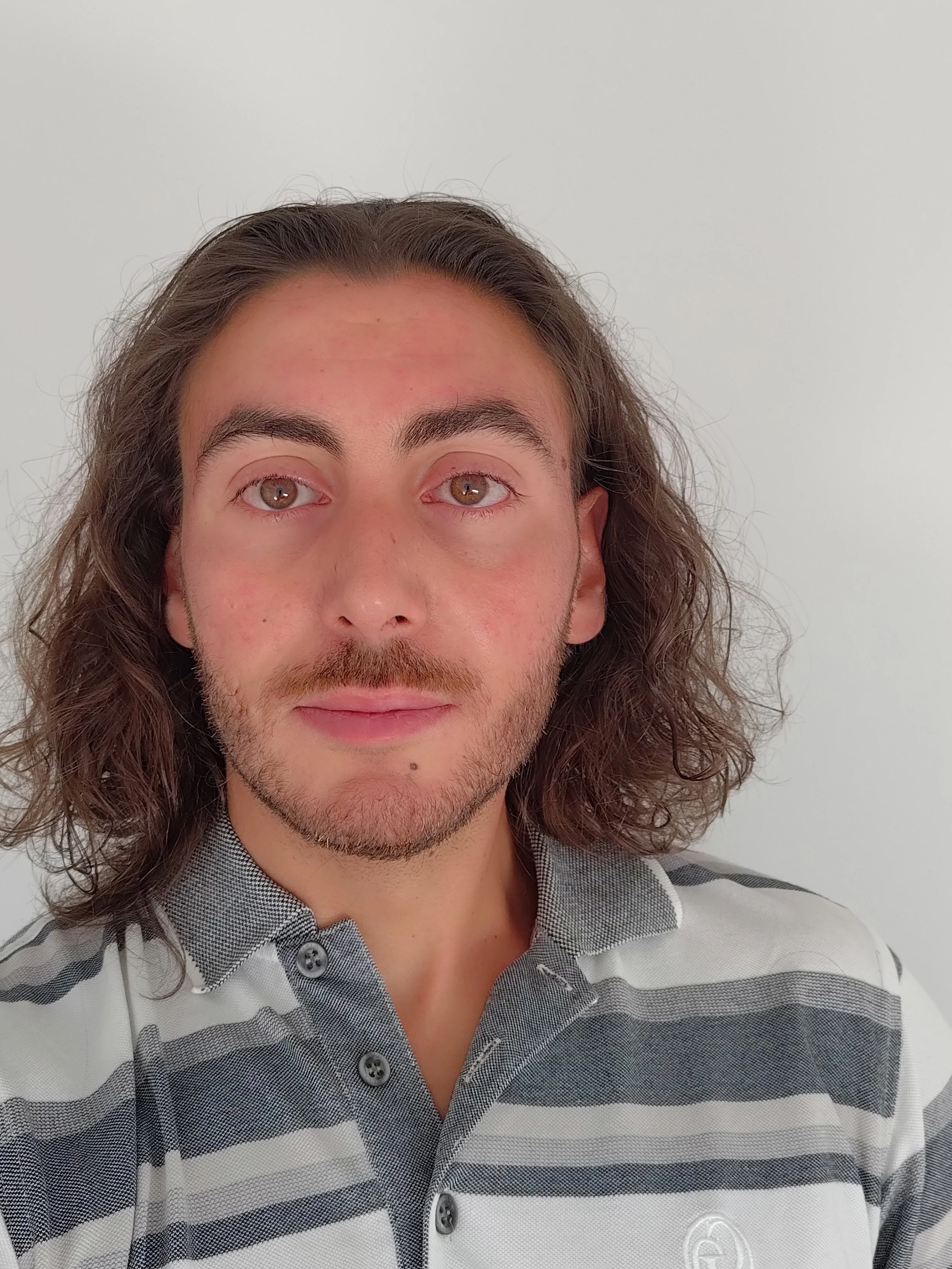
Andrei Romanov is a Romanian-born writer and independent historian based in Portugal. He is the author of Masters of the Ocean Sea (2026), winner of the London Book Festival Award for General Nonfiction and the Pacific Book Award for Best Biography. His work is held in the permanent collections of the British Library, the Cambridge University Library, the National Maritime Museum (Greenwich), and The Mariners' Museum (USA). His creative work appears or is forthcoming in Thin Places Literary Journal, Wordpeace, The Markaz Review, and Quibble Lit.