
Pretend // Tricia Knoll
Let’s play spaceship in this generously decorated refrigerator box which pretends to guard against heat, meteors, and news flashes about dead friends.
from judge Todd Robinson: “Pretend” is as capacious and possibility-dazzled as the decorated refrigerator box it describes. The warmth of its invitation lowers a reader’s defenses, hurtles them through imaginal realms and hallucinatory terrain rich in visual sweets and psychic threats. In the wobble of space, the wonder of world-grit, the necessary palliative of friendship, this poem expertly braids possibility with reality, deft details with lightsome rhymes. Read it and be renewed.
Let’s play spaceship in this generously decorated refrigerator box, which pretends to guard against heat, meteors, and news flashes about dead friends. We crave escape. You wear your green frog hat; I drape my shoulders in my cape of Haida design. Let’s paint our fingernails black and sit cross-legged on purple pillows. Leave Earth singing wheels on the bus as if we are children. Fortify our lunch box with poppy-seed cake for a coffee break. Let me captain our ship for the first leg, where we jettison the thruster rocket of my obsession with today’s disheveled floods and fires and your dismay at your family’s betrayal. You take over when we wave to the moon, view earth war-torn, swirling with hyperstorms, a green of promise, blue of forgiveness. I don’t know how long it takes until we decide to turn back. We can’t be gone forever. My head rests on your shoulder, along with cake crumbs on your shirt. You hold my thumb until you guide our glide home, release the parachute for a soft landing in a heaving sea. To reawaken to wind on our skin. A pretend that mends. With the help of a friend.
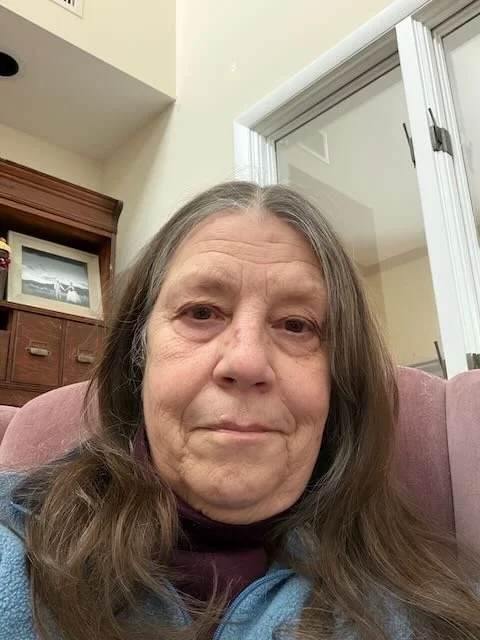
Tricia Knoll’s The Unknown Daughter was a finalist in the 2025 New England Poetry Club chapbook contest. More than 300 of her poems appear in journals and and nine collections, full-length or chapbook. Wild Apples (Fernwood Press) details downsizing and moving 3,000 miles from Oregon to Vermont. After 18 years of working with free verse, she is now writing mostly prose poems. Fernwood Press will publish her full-length poetry book, Gathering Marbles, in July 2027. Knoll serves as a Contributing Editor to the online journal Verse Virtual. Website: triciaknoll.com
Seeing Him // R.A. Morean
When he died, he left his face behind. Not just in photo albums or in frames centered on walls, or in the soft feathery folds of early morning dreams, but concretely. Like now.
When he died, he left his face behind. Not just in photo albums or in frames centered on walls, or in the soft feathery folds of early morning dreams, but concretely. Like now.
She stands in the aisle across from the cashier, trying to find a pen in the dark crevasses of a large chapped brown leather bag, digging through old receipts, a pacifier, used baby wipes, several crumpled prescriptions, a piece of granite, a clutch of creased cards with flowers or candles or doves or any combination thereof pictured on the front and inscribed with wide rolling script, a yellowed dog tooth, a scattered fistful of perfectly curled sandy sea shells and a wad of brown made-from-recycled-paper napkins from Chipotle.
Her concentration excludes the quiet toddler in the heavy shopping cart who is stretching over in his seat to grab anything brightly packaged on the candy shelf. She glances up quickly and moves the cart further away from his little outstretched arms with a push of her foot. In the next aisle over, a man is checking out as well, buying just a magazine with cash. She finds her pen, raises the checkbook to the counter, and then, in a breath, in a moment too minimal to even have purpose, she glances up. And there he stands.
It is not him, though. Of course.
But in that nanosecond—in that whisper moment—she sees him. There in profile, glancing down at the change in his hand, or something in the title of the magazine, or at their small son. Then he vanishes when the man looks up at her and meets her eyes. He smiles and nods goodbye to the ponytailed teenager who rang him up, and in another moment, the sound of automatic doors closing signals he is gone. She is left again, the pen pressing down hard on the paper, and as she signs her name, she sees both of theirs in print and reminds herself to order new checks.
He appears only when she is unprepared to see him. The first time was at the gas station around the corner. It was just a month after the accident, after the gas truck took the curve in the interstate too fast and plowed through a chain-link fence that was supposed to be replaced with a cement barrier, but the budget evaporated for that particular fiscal year. A shame. A tragedy. Just terrible. I am so sorry. We are so sorry. The driver, a man named George, was new and did not gauge the weight of an empty truck when he took the curve. She did not ever want to meet him. The attorney said his wife left him a week earlier—a week before the accident. She did not want to ponder how her life could be, how he might have lived, if a faceless woman had stayed in a marriage she knew nothing about.
Stepping out from the car to slip the nozzle into the slightly dented gray Subaru, she felt someone moving, and a sandy-haired man suddenly appeared on the other side of the pump, smoothly replacing the hose. That was the first time she saw him. Standing right before her, in the sun, looking away from her. But it was his cheek, his long nose, the same twist of sideburn, his strong throat. A whiff of gasoline scoured her nose, and she felt faint, and in the winter-cold, her breath came out uneven. She jammed the nozzle back inside the pump, tore the receipt as it was printing, and climbed back into the Subaru, dropping keys, grabbing them again, turning the engine over, pulling out too fast. Their son fussed in the back seat.
Since then, she has seen him at least once or twice a week every week for the last few months. Instead of growing tedious, each fleeting encounter leaves her drained and slightly more undone, as if a malignant purpose is guiding him back to her or her to him. It’s always the same, with him congealing in the periphery and then, as she turns, bringing him into focus, he vanishes. Completely—every single time. Street corners, the drug store, the children’s park, through a restaurant window, on the bus, in a doorway, in all these places, some force conjures him, and she is at a loss as to why. Or when it will end.
The only time she doesn’t see him is when she needs him. When Caleb is in the bathtub and someone knocks on the front door, or she’s finished loading groceries in the car and he’s strapped in his seat and she can’t return the cart, or he’s eating in his highchair and the phone rings upstairs—in each case, she doesn’t dare leave him even for a second because, now, anything might happen. And if it did, she knew she would be swallowed up by something so sinister in its anonymity that she herself would disappear. There would be no recovery from a toddler’s loss.
Her husband’s face never reaches her after a meal or in the car—even though in both cases she often glances to where he would be sitting, sure she will catch a glimpse of him. But no. He arrives only when there is a body present, another man, like a stand-in, or conduit.
In bed, in the dark, she can’t bear to roll to his place because she cannot picture his back. And, finally, in the deep night, just before sleep, after several months of waiting, when she can neither bear it nor stand it, when she is finally brave enough to try it, and her hands find the lost “v” of herself, she cannot summon him. She continues, caught in a perverse duty, and when she comes, the waves fan and oscillate interchangeably, rolling her over into an abyss of guilty betrayal and then the hopelessness of the betrayed. Afterwards, she cries, hard and long, and her face hurts for his complete and total absence.
Half of her life now is hidden.
“Come on, Caleb,” put your damn foot in the shoe.
“It’s time to go,” right now, right now, right now, I can’t believe this.
“I said no candy,” everyone’s looking at me.
“I can’t read. Mommy’s really tired,” get away, stop touching me.
“Just go to bed, go to sleep,” what the hell is wrong with you—go to fucking sleep.
The first half of her sentences comes out soft and measured, and everyone is amazed at what an incredibly resilient person she is. They shake their heads and say things like, “God only gives you what you can handle.” The inside of her head screams the second half. They do not know she does not sleep or still cries or is succumbing to a dark wave of hatred for her son, the source of which is unknown.
She does not believe in God. And not because of the accident. She has never believed in God. The crash, his death, her unspoken half-life, all lead her to believe she is absolutely right.
Caleb is growing fast now. It is late spring, and he is finding frogs in the early soft mud in the lot beside their apartment. She watches him running around in the side yard, knees muddy, fingers splayed, talking to himself. She fingers the number she wrote down from the grocery store kiosk on the back of another prescription she refused to fill. It was just this afternoon, and the last place she saw him. Coming up behind her to grab some vitamins, there was someone with his smell—sappy cut limes—and she turned, knowing she shouldn’t, and there he stood, for just a singular moment, his light windbreaker brushing her bare arm. It was all too swift to say a word, to think, to do anything but hold so still she could stop time. She placed the folded paper near the phone in her bedroom. It’s Not About Fault. Every Parent is a Loving Parent. Call Us—is what the notice on the kiosk said.
It was certainly not her fault. But she was still a monster. When Caleb went to bed, it was all she could do to tuck him in and leave. She resented not being able to go anywhere without him, wrestling with the stupid car seat, packing snacks, milk, juice, diapers. She didn’t want to change one more single diaper, make another meal, stuff boneless limbs into jackets or socks, get up every night for one reason or another: bad dreams, diaper rash, hunger, something invisible in an eye, a splinter. She couldn’t stand watching him anymore and did not take him to the park.
But the thing that made her write down the number from the Kiosk was the night before, when she kissed him, she bared her teeth and pressed down on his face so hard he started to cry, and she had to turn and walk away. Later that night, she cried into her pillow.
Summer was hot. And though the heat made records, there were no jackets to contend with, or cold drafts in the apartment, or runny noses. The apartment complex had a shallow pool painted aqua marine, and it opened last week for the season. He loved to go and splash. There was a gaggle of young mothers who came with their children after work in the late afternoon, and she joined them. She had quit her job when he was killed, nine months ago. They had bought life insurance when she found she was pregnant with him, and she quit work as an assistant at a big law office. She was not going to work when he needed her. She did understand he needed her.
The cement is burning, and small footprints evaporate quickly. There are four other mothers around the pool. One, the blonde, is smoking with her legs crossed on the lounge chair, looking very much like a 1950s movie star with bright red lipstick, a white one-piece bathing suit, and a matching big white floppy hat. The other mothers are talking about a reality show, while intermittently yelling directions at their children, some in Spanish. The children are older than Caleb, four girls, three other boys, all wet and slick like seals, and Caleb wants to play.
But that means getting into the water with him. The shallow end is still over his head, and she does not want to get wet. The bathing suit she wears is navy blue, a one-piece, and faded in spots. It gets loose in the water, and the straps fall down. She just managed a shower this morning, and if her hair gets wet, she’ll have to rinse the choline out later in the sink because Caleb isn’t sleeping well and has discovered how to climb out of his crib. And her hair will get wet. He will splash, and she doesn’t want to yell at him. He’s in a pool, for god’s sake.
“Mommy, go in. Mommy, go in now.”
“Mommy, go in, please?” Shit, shit, shit.
He is sitting at the edge, not looking at her, poking one chubby index finger into her thigh. “Mommy, please?” He quickly leans over and places his head in her lap for a second, and then darts to the water. She instinctively grabs his arm and relinquishes, slipping in quickly, the cold water making her inhale fast, and wrapping his arm over her shoulder. He turns fluidly and wraps his other arm around her neck, and gives a squeal. The other mothers look over. She has not gotten wet with Caleb since the pool opened, since he died at the end of last summer.
In the cool water, his small body is lighter than a bird’s. He is nothing. He stretches out one hand and slaps the water, laughs at the transparent chaos, turns at the waist, and slaps both arms against the surface, just delighted with himself. She walks around in a circle while he tests the surface tension again and again, and then, realizing she will have to rinse her hair in the kitchen sink anyway, heads out to the deep end, thinking she will tread water with him, that she can tread water with him perched on her hip.
Caleb grows wide-eyed, laughs again as the water curls between them, and then throws his head so far back that she has to stop, or he will arch into the water. She tilts like a balance so he can still extend backward, but misses the surface, and she sees his straight sandy hair ropey with water, fall and fan out, and hiccup on choppy little waves. She walks around with him in his upside-down world and tries to ignore the singular idea in her head. The phone number is upstairs. It would take almost nothing. She could just let go. He would slip under.
The sun glitters on the surface of the water, and she makes her circles wider so she is really beginning to tread water going out. He squirms and laughs, and she must hold him tightly as his buoyancy grows. It is as if he is not even there, floating. He senses he cannot arch back anymore and watches the world through two fists held up to his eyes. Water fills her mouth, and he climbs higher, squirming to stay above the surface. She can feel his toes on her chest, pressing.
She knows she can never let go, and this is how it will be for the rest of her life. She will always have to be vigilant, and she doesn’t trust that she can be so strong, so focused, so in love for so long. Making the loop coming back from the deep end, his weight grows more substantial with each step, and he shimmies back down, an arm returned around her neck, and he tosses his head back again, looking once more for that upside-down world.
With his throat creased with baby fat, she tickles him, and he laughs and tries to protect himself and pushes himself upright against her shoulder again. He lays a wet head of new lank curls against her hot collarbone, and she turns in a straight line back to the shallow end, noticing two of the mothers are standing and watching her, and the one with the cigarette is half out of the lounge chair, clutching her hat.
But she is not looking at them. His wet hand found her cheek, and he looked right at her. And she sees him. Not fleeting this time, but real. Caleb does have his eyes, blue and green and like the sea, and when he turns, like now, to wave at one of the seal girls dancing in the water, she sees a ghost of a dimple. But it’s not a ghost, it’s real flesh. In the sunlight, she clearly sees that his hands, resting on her forearm, are his hands, and broad—everyone says Caleb will have large hands. And then he turns to her again, and she kisses him, smells him, he is a wet little boy, her boy, not his father but a part of him, and she can bear it. More than that, she can see him now, clearly, outlined against the blue of both sky and water.
And, as she moves to the curved edge of the pool, she understands she will never see Mark again, except when he is enclosed in those wooden frames and shiny albums—there will be no more fleeting moments of love, or desperation, or bewilderment.
She lifts Caleb up, still light, and as he leaves the water, his weight becomes real. Then they sit at the edge of the pool and count each other’s fingers and toes.
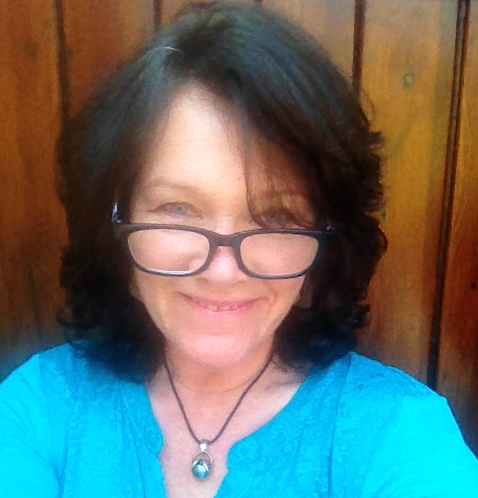
R.A. Morean (Rebecca Morean) is a Pushcart nominee, an award-winning fiction and nonfiction writer, and professor. She publishes literary fiction, romance, and mystery, and has two screenplays represented under a dazzling array of pseudonyms. Her own work has earned a Strand International Short Fiction Award, starred reviews in Kirkus Reviews and Publishers’ Weekly. Lee Martin, Pulitzer Prize finalist, describes her writing as “. . . spot on lyrical and full of grit exactly when it needs to be.” She continues to teach creative writing and publishing, and just recently relocated back to Vermont. A single mother of four amazing adults, she is left with one puppy and many empty boxes. Learn more about her and make contact at www.ramorean.com.
Infant Of // Patricia Knight Meyer
“At thirty-eight, you want to find her?”
My mother is stewing in her wheelchair, pulled up alongside the bar in what she calls her “shithole shoebox” senior-living apartment. Although she still walks short distances, she likes how the footrests of her wheelchair rise to meet her feet, accommodating her short legs, “which don’t go all the way up,” she sometimes jokes.
“Infant Of” is an excerpt from the forthcoming book WONDERLAND: Memoir of a
Black-Market Adoption.
“At thirty-eight, you want to find her?”
My mother is stewing in her wheelchair, pulled up alongside the bar in what she calls her “shithole shoebox” senior-living apartment. Although she still walks short distances, she likes how the footrests of her wheelchair rise to meet her feet, accommodating her short legs, “which don’t go all the way up,” she sometimes jokes.
It’s a gray fall day, and we’re sharing our Wednesday happy hour. Having made gin and tonics, I sit in my usual spot on the futon, ready for our chat about how my day at work went, what the pundits on TV are saying, and which news anchor she dreamed she danced with the prior night.
“Oh, Dan Rather had all the moves! With him, it’s always the tango.”
It touches me that despite the limp from a broken hip and the oxygen cord stretched across her face, she still dreams about moving and grooving with journalism’s hottest.
“Do you ever sleep with them?” I once asked.
“No, but Anderson Cooper lets his hand wander.”
“You’re not his type,” I’d reminded her.
“What can I say? Gay men love me!”
She works hard to get the last word, and usually it’s a zinger. But today, my mother isn’t talking about her dreams; she’s talking about mine. It seems she’s seen the Ancestry.com charge I made on her credit card while chasing that dream, and now I’m cornered.
“I thought you’d at least wait for me to drop dead before you looked for her.”
She’s only half joking.
Behind those boxy frames, she studies me. Adjusting her posture, she attempts to appear more composed, perhaps a tad healthier.
“Someday I’ll look, but not now,” I assure her. Having Mommy’s blessing to search isn’t the same thing as telling her I’m already doing so.
“You wanted me to find out, didn’t you? Why else would you use my card?”
She’s got me there. Apparently, not too blind to take a magnifying glass to a credit card statement, it’s like she’s caught me up to something. Which she has.
Having learned that Texas’s birth records were searchable on Ancestry.com, I’d gone momentarily bonkers and used my mother’s Mastercard to open an account. I’d left my wallet at home that day, and her emergency card in my work drawer offered an easy solution to my immediate predicament. I thought I’d gotten away with it.
While at UT Austin years before, I’d stood in the capital-based Bureau of Vital Statistics, mouth agape at the three-foot pile of volumes—all the 1970 birth records for Harris County, one of nine counties in the Houston metropolitan area. “They aren’t by date,” the record keeper said, grunting while she’d stacked them before me. “Each is listed alphabetically, by mother’s last name.”
I’d leafed through thousands of bible-thin pages that day, looking for mothers whose babies were listed as “infants of,” those who most likely had relinquished, women like my birth mother who’d blindly trusted the system that absconded with their infants. But without knowing her name, my birth name, my date, or even the exact year of birth, searching the stacks had seemed daunting and pointless. Now, according to my sources, these records have been digitized and are awaiting scouring. And that’s when I set up the account and started digging. The act seemed benign at the time. Why didn’t I wait until I got home to use my own card? Did I subconsciously want Mommy to find out? Maybe?
“I’ll pay you back,” I say.
“It’s not the money I’m concerned about,” she snaps, side-eyeing me while fumbling in the pocket of her robe for a cigarette and lighter. I check for the hum of her O2 machine, which I don’t hear, and relax—glad she’s not about to accidentally set herself on fire again.
“Even if I found something, I wouldn’t reach out. Not now.”
“Why not?” She asks like she really wants to know. “Don’t you want her to meet me?”
“It’s not her meeting you I’m worried about,” I answer, rattling the ice in my glass, wishing I’d poured a stronger drink.
Hopefully, that puts her questions to rest. She doesn’t need to know about my years-old profile on CousinConnect.com, or the warning received from a well-intentioned stranger: “I hope you already have a passport. Since 9/11, the passport office only accepts long-form birth certificates.” I don’t know if that’s true, but long-form requirement or not, since the state seems to have no record of me, adoption or otherwise, I guard the one “identifying” document I have with my life—even if it’s a fake, which it very well might be. It’s all I’ve got.
“So, you didn’t find anything?” Mommy pries, the smoke from her last drag screening her concern.
“You remember that massive stack of birth records at the Bureau of Vital Statistics I told you about? How I wanted to go through them, but it was just too much? Well, now they’re searchable online. So, I could potentially find something.”
Seventy-two, my mother nods like she knows everything there is to know about electronic records. Her silence is accentuated with a long sip of her drink and an even longer drag on her smoke. Sometimes silence means things are about to go sideways, and I’ll leave with her upset or crying. Either way, she cries, sitting here hours on end with no one to talk to. She’s not one to join gardening clubs or crochet circles, and her eyes are far too bad for driving.
“I have nothing in common with those people,” she says, peering through the blinds, as shadows shaped like her neighbors amble up to the clubhouse for bingo or backgammon. Unless they are belly up beside her at the neighborhood bar, she considers most her age “fuddy-duddy drips” and “such boring bastards that neither Heaven nor Hell will have them.”
On these visits, I usually call in any meds needing refilling, tidy her apartment, and make a day or two’s worth of food so she eats well while I’m away. “Congrats, you’re finally rid of me,” she’d spat the day she moved in, sulking about her new five-hundred square feet of independence, resigned to accept the fucked-up fate I’d dealt her.
“You can’t leave me in this hellhole to rot and expect me to cope without my vices,” she often barters. “Make it a carton of smokes and a gallon of Bombay if you love me.” I agree reluctantly. My compliance is ushering her to her death, but as Daddy did, I give her whatever she wants; Band Aids for the wounds she believes I’ve inflicted.
Lately, though, the Lexapro seems to be bringing Happy Mommy back, at least a friendlier drunk than the previous version. I’m no longer the “ungrateful, self-centered bitch” of a daughter who dropped her here. Now I’m “the world’s best daughter,” especially when I deliver the goods on time and in sufficient quantities. Still, how can I leave?
No matter how much she says she’s fine, each time I drive away, I’m abandoning her all over again. I look at the clock, calculate the time between now and when I need to head home to my husband, and push the guilt of leaving to the back of my mind.
Pulling out a tray of meds from under the coffee table between us, I begin refilling her massive monthly pill planner. Snap, snap, snap. Prying rows of lids open, I dose each slot, one after the other: morning, noon, afternoon, and night—plop, plop, plop, plop. “Truly, without being morbid,” I say, “I don’t want to share what time we have left with another mother. If I look, it’ll be when you’re gone. Not that you’re replaceable or anything.”
“You sure you didn’t find anything?” she presses.
“Not really,” I lie, dropping each pill into its umpteenth slot.
I had looked. And one record had stood out, an “infant of” with no birth name given or birth father listed, delivered the very same week I was presumably born, to a woman named Dinah—a name that sounds a whole lot like the name my mother let slip long ago, the name Diane. Within seconds, I’d slapped shut my laptop, overwhelmed by the prospect of sliding down a rabbit hole that I—the me I know myself to be—might not climb back out of.
“I saw some ‘infants of’” I admit, “but no real leads. Even if I found a name, can you imagine how hard it would be to track down a person? People get married, they move, they die. But since we’re on the subject, is there anything you need to tell me that you haven’t yet?”
I keep plopping: diuretics, blood pressure pill, blood thinner, heart pill, thyroid med, anti-depressant, NSAID, iron, potassium, vitamin D … Plop, plop, plop, I focus on the slots and try not to look overly interested in her answer.
“What do you mean?” she asks, wiping away a tubular grey ash that has tumbled from the tip of her cigarette and landed in the lap of her lilac house dress.
“Like some details you still need to share? Maybe about how things went down the day you drove away with me. You know, with no papers or BC? It’s not like I have a lot to go on.”
“No, I don’t think so,” she says, eyes on the floor. “But don’t worry,” she adds, “Lola gets what Lola wants.” I’ve never figured out why my mother loves quoting old musicals as a way to taunt or humor me. Lola is from Damn Yankees.
“You know what Lola really wants?” I prod on, snapping thirty days of pill box lids closed in rapid succession, “I want to find that attorney. Find out what he did with your $30K and my papers.”
My mother raises a dismissive eyebrow and turns her head. End of conversation. I may not be done answering her questions, but she’s done answering mine.
The medicine tray rattles as I slide it back under the coffee table. I look up to find my mother’s gaze has wandered out of the room, thoughts threading through the sliding glass door, beyond the autumn leaves, to a time when I’m again alone in this world. I’m at once aware of the wind whistling along the windowsill, the tick of the clock on her wall, the dripping faucet at the sink.
“So, once you find her … after I’m dead,” she sighs, eyes cast out the door, “how will you feel if she doesn’t want to meet you?”
“Well,” I say, scooting to the edge of the futon, reaching for her hand, “at least I’ll know I tried. I do wonder about her, but mostly I want her to know that I’m okay, that you and Daddy gave me a good life.”
The last part is a lie, but my “good life” response draws my mother’s eyes and hands to mine.
“Well, I hope you aren’t hurt or disappointed. What if she’s ignorant white trash?”
“Seriously, is that your opinion of my DNA?” I joke, and she raises a quizzical eyebrow that makes me laugh, signaling I’ve set her mind at ease.
“I’m empty,” Mommy whines, playfully upending her glass, and I rise to pour another round. The booze eases the pain of my leaving, and my second, her third, will seal the deal for us both.
“The mystery of me is a lot like Alice in Wonderland. Alice slides down a rabbit hole and loses all sense of herself. It’s like that, but it’s more about climbing out of that hole, like to find out who you were before you fell in, than finding any particular person.”
Measuring out shots of Bombay by the fridge, I realize I just compared my life with her and Daddy to falling into a massive sinkhole.
“I don’t care who she is.” I go on. “I just want to thank her. Hell, she may not want to hear from me. I’m likely a dirty little secret kept from a family that knows nothing about me?”
I turn around, drinks in each hand, to find worry wilting my mother’s face. It’s as if she’d never thought of this before. It says, I don’t want you to do this now, but I don’t want you going through it alone, with me dead and gone.
My heart drops. This is harder for her than it is for me. I simply want a legal birth certificate, but she’s dead-dog frightened. Is she fearful I’ll be disappointed by the mother I’ve compared her to all these years, or is there something darker I might uncover?
Who in the world am I? has always been my great puzzle. Mommy still needs groceries, meds, trips to the doctor, and bi-weekly visits. Me. She doesn’t need me searching for her replacement.
Yet, if I lose my only identifying document, I’ll likely never be able to replace my passport or prove my citizenship. The minute people start dying, the truth will get that much harder, if not impossible, to uncover.
“I may never look, you know,” I say, pushing the glass across the bar, urging her to drink up, forget about it. “I guess it’s just curiosity.”
*
And that was it. The last time we ever talked about it. I wish I’d told my mother that, despite being each other’s replacements, no one could ever take her place. That she was and would always be my only mother. That she’d been enough. But the last part, her being enough, I could never have said, even as much as I wanted to.
Separation trauma had clouded every aspect of my life. I couldn’t yet embrace the truth—that even when adoptive parents are the very best, they likely aren’t enough to fill the gap in your abandoned soul. That’s normal. Not betrayal. I didn’t just want or need to know who I was and where I came from; I deserved it. Raised by those who created you, dropped in a baby box, placed for adoption, donor conceived, or trafficked on the street, every soul deserves the right to their true identity.
It hadn’t yet occurred to me that if I ever met my first mother and wanted an authentic relationship with her, I, too, would have some ugly facts to face. I’d not been raised by the idyllic family of so many first mothers’ fantasies—the placement fallacies woven and sold to them by coercive agencies, lawyers, and parents of their generations.
Who knew what lies the attorney had told her? How many promises he’d broken? Or what she’d think about the less-than-perfect couple who raised her baby. Nor did I realize that she, too, might not be the ideal, uncomplicated mother of my dreams.
Leaving my mother’s apartment that day, stopping on the sidewalk as I stepped toward the car, I still recall the sight of her through the window, seeing her little legs through the half-open blinds, rooted there at the bar in her wheelchair. Despite her inability to be the kind of mother I needed, I still remember wondering how sad she’d be ’til I returned, how I stuffed down the sobs that squirmed in my throat as I shut the car door and backed out of the parking space, but I can’t for the life of me recall if I told her how irreplaceable she truly was.
Patricia Knight Meyer is a journalist, adoption reform advocate, and survivor of the Baby Scoop Era black market. Born in 1970 and sold on the black market via an illegal adoption, she obtained her first legal birth certificate at age 47. She serves on the board of the National Association of Adoptees and Parents (NAAP), keynotes at national adoption conferences, and leads memoir writing workshops nationwide. She divides her time between the Texas Hill Country and New Orleans. WONDERLAND: Memoir of a Black-Market Adoption is her first book, and it releases Nov. 3 by Unsolicted Press. Find her on Facebook at @Wonderlandthememoir or
@patriciaknightmeyer, and on Instagram at @wonderlandthememoir or
@patriciaknightmeyer. Visit her website at www.myadoptedlife.com