
Homespun // Molly Quinn
“They’ve done it again, those bastards,”
I grumble to him of the greed growing in our small town,
choking out the loveliness that used to flourish here.
“They’ve done it again, those bastards,”
I grumble to him of the greed growing in our small town,
choking out the loveliness that used to flourish here.
He listens and slices a tomato to the rhythm of my rant,
red and ripe and freshly plucked from someone else’s garden
(a neighbor or a friend from work, perhaps).
His careful fingers plate the uneven pieces
then sprinkle them with pepper and salt.
He thoughtfully places the dish between us
without a word.
I look at him and he gives a nod—
a final beat to my tirade.
We feast in silence on the summer fruit
as if we were gods devouring ambrosia.
Such a small gesture to share a
simple plate of sliced tomato, homespun
hints of earth and sun within
its tender flesh, yet in this quiet moment
the whole world, all of it, is a tomato–
garden grown and given to me
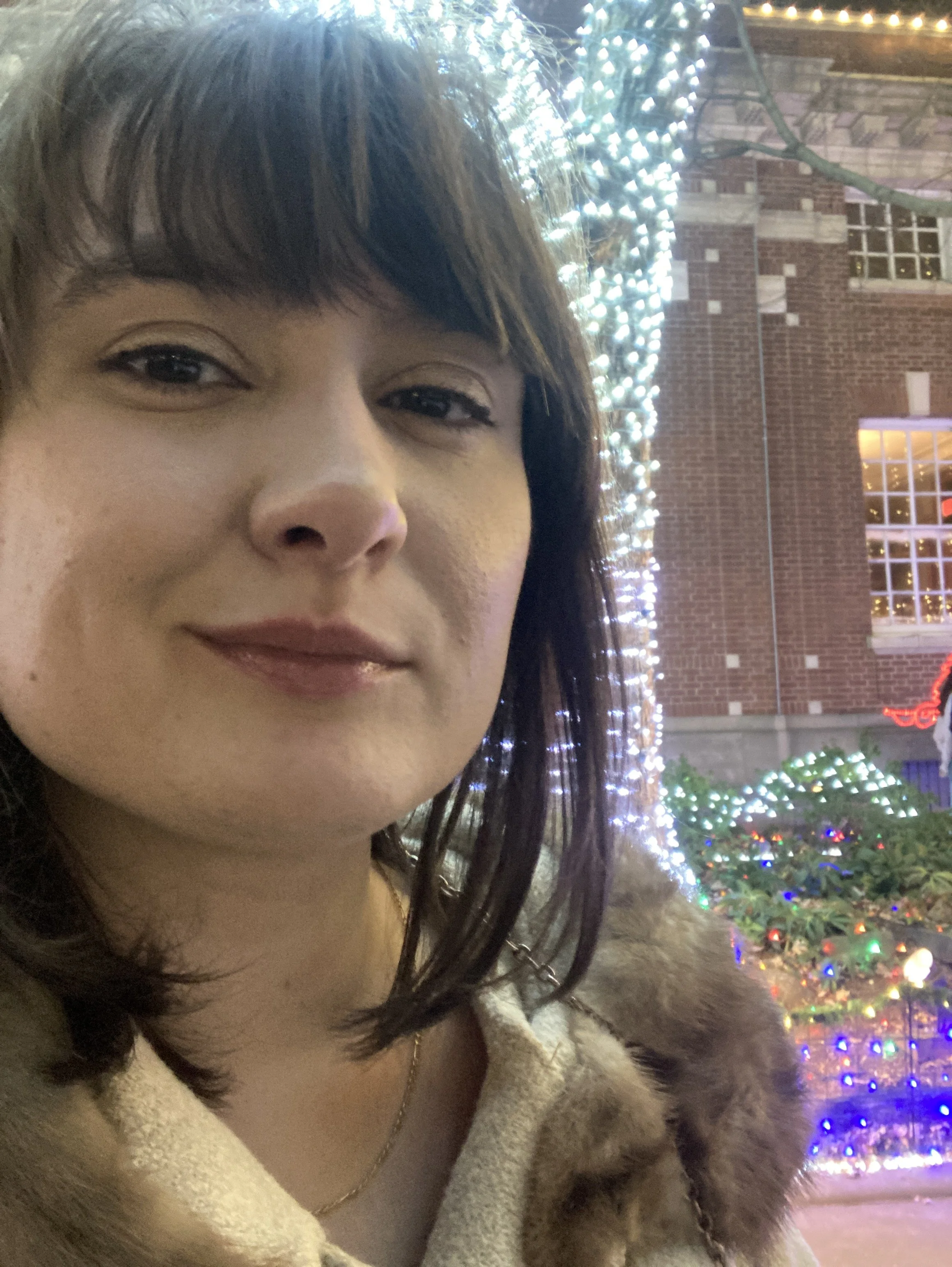
Molly Quinn is a poet and incurable romantic. She lives in a town snuggled within the Ozark Mountains, where she works as a librarian. In her off time, she enjoys reading, writing, and finding meaning in the mundane.
The Shoemaker Finch That Does Not Exist // Les Bares
The serrated edge of a leaf on a beech tree
saws holes in the breeze, spins whirlpools
of air from its pointed tip.
It seems to be trying to tell me something
as it goes about its business being a leaf.
The serrated edge of a leaf on a beech tree
saws holes in the breeze, spins whirlpools
of air from its pointed tip.
It seems to be trying to tell me something
as it goes about its business being a leaf.
I populate the tree with a shoemaker finch,
a bird with hints of orange under its wing joint.
A bird I have apparently invented
as the internet tells me there is no such thing.
This cobbler bird hatched somewhere
in my fantasy flits invisible on wind currents
stirred by the knifelike edge of a leaf.
The tree itself is real, or I hope it still is
there on the shore of Lake Ontario.
I remember it, grand, with all its proclamations
of love carved into its silver bark.
The shoemaker finch, which does not exist,
warbles its buzzy slur, blessing young lovers
kissing beneath the beech tree. Their ardor
going extinct before it can be engraved
in the bark, before it too can ever be named.
All the while, the turbulence of a beech leaf
is sawing holes in what never existed,
or what is invisible to the naked eye.
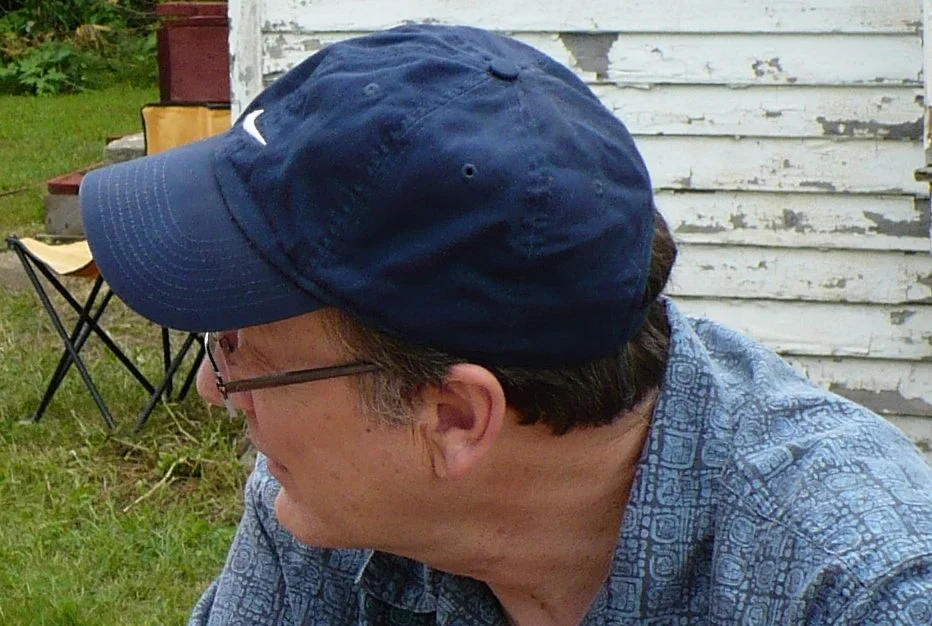
Les Bares lives in Richmond, Virginia. He was the winner of the University of Virginia 2023 Meridian Journal Short Prose Prize and the 2018 Princemere Poetry Prize. His work has or will appear in The Midwest Review, The New York Quarterly, Spillway, the Irish Journal Southword, the English Magazine Stand, and other journals.
The Sundered Seams // Michael McIrvin
The man, considering without cease
how his world will soon be split to atoms, takes
the hand of his boy, who just asked if God
is in this gold-lit meadow among seedheads
heavy and swaying
For Eli and Jesse
Suffering is alchemy, change is God...
- Marilyn Chin
The man, considering without cease
how his world will soon be split to atoms, takes
the hand of his boy, who just asked if God
is in this gold-lit meadow among seedheads
heavy and swaying, insects turning light
to sound as aspen leaves shimmy, birds
singing under blue and intangible white, the day
turning down through every shade of heaven.
The child reaches to be carried and is asleep
before his head hits the man’s shoulder.
The child who will one day ask that his world
be mended, every wounded atom sewn
back together by a magical seamstress,
her thread made of sunlight and bee buzz
and the slightest breeze.
The child whose younger brother, not yet old
enough for these mountains, will someday ask
the same question after waking from a dream-
rescue of younger children assaulted by storm:
the dream hero who will himself, when grown,
pray to be saved from yet another terrible rending.
These children, who have not heard talk of God
and yet can read the name as it is written
on the dying page of a late August afternoon,
in fly dance and lark flight and every turn of leaf
and flower and stem, who can hear the name
shouted in a dream tempest that will become life.
The child in a far town, someday-dreamer-of-God-
in-a-fearsome-wind; the child cradled
in the man’s arms, sleeping soundly
as if any universe could ever be less than whole.
The man, as he walks this two-track road, whispers
lessons of care and grief for his sons, whose lessons
for him, the divine nearly shouting in their small voices,
are of beauty beyond measure. Not just in love’s
every breath but in the sundered seams, in the sky,
faltering blue or black-and-spinning. Within
the inevitably failing light between
whereby we all are transformed.
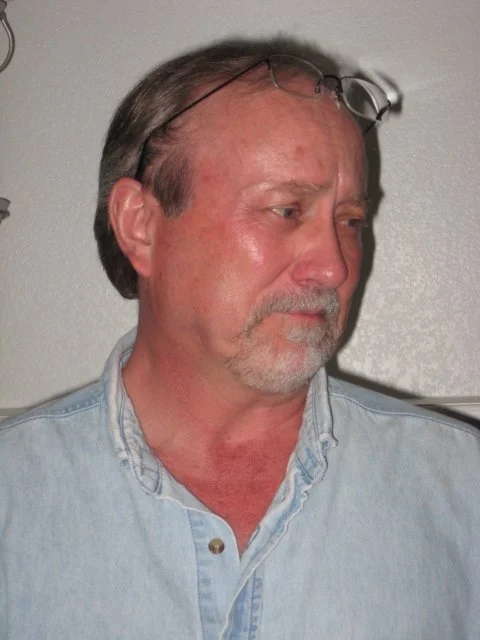
Michael McIrvin is the author of several poetry collections, including Optimism Blues: Poems Selected and New and Hearing Voices (Fearful Symmetry, 2020). His most recent novel is The Blue Man Dreams the End of Time. Michael lives on the High Plains of Wyoming.
The Middle of the End // Elena Ender
I can smell the tar bubbling up and oozing down the street as a sign of the end times. The cars get gobbled, and the drivers climb out of their windows to sit on top of their hot roofs until someone brings them a small bridge to get them to the sidewalk, a mound of pillows, or a plank of wood, perhaps. Our death is inevitable, but at least we can help our neighbor get back to their lawn where they step on frogs, fallen from the sky, croaking over and over.
I can smell the tar bubbling up and oozing down the street as a sign of the end times. The cars get gobbled, and the drivers climb out of their windows to sit on top of their hot roofs until someone brings them a small bridge to get them to the sidewalk, a mound of pillows, or a plank of wood, perhaps. Our death is inevitable, but at least we can help our neighbor get back to their lawn where they step on frogs, fallen from the sky, croaking over and over. I can hear the cicadas scream in chorus with the frogs, buzzing a harmony that only a mother could make you feel guilty about.
It’s because you had premarital sex, she says over her morning coffee, doing the crossword and hearing the pitter-patter of blood drizzling on the aluminum siding of my childhood home. And it was gay, she bemoans. I moved back in at the beginning of the end, but the apocalypse hasn’t fully taken enough time out of my day to keep me a safe distance from Mom’s grumblings. She is retired.
I don’t think the world is ending because I had premarital gay sex.
You never know, she shakes her head. But it surely wasn’t me. Dad cleans up the messes that seep indoors, but knows his favorite lawn-maintenance tasks are a lost cause. If I am the reason for the apocalypse, I’d mostly feel guilty for that; he loves taking care of the hydrangea bushes.
I still work remotely, writing social media ads for an agency that represents some questionable corporations. I’m getting paid, but not paying rent, and also going out much less, obviously. So if the world sticks around for another two years, I would maybe be able to afford a down payment on a condo in the city. It’s unlikely, but it would be kind of nice.
None of my friends live in the area. It’s all just people I knew from high school who never left. It’s embarrassing seeing them again after so long, especially feeling like I failed for not hacking it in the city through all of this. It was just so on fire.
I try to keep up with my friends from the city, but not many of them are in places with cell service or general livability. Everyone without a plan was invited to join me, but no one wanted to share a bedroom. I mean, I get it: I snore, and I am bad about putting laundry away.
The days move slowly as the world waits for a merciful close. After the initial uproar, we became and remained relatively quiet and level. I stopped dreaming a few weeks ago; I just sleep in static and wake up to an unfriendly alarm.
During the hours between storms, a hot, orange dusk, I take our old dog Benny for a walk. He sniffs the curb clovers and pulls at his leash to catch up to the creatures that have fallen from the sky or unearthed from below. He never tries to bite, though, and he never even growls. He just wants to play.
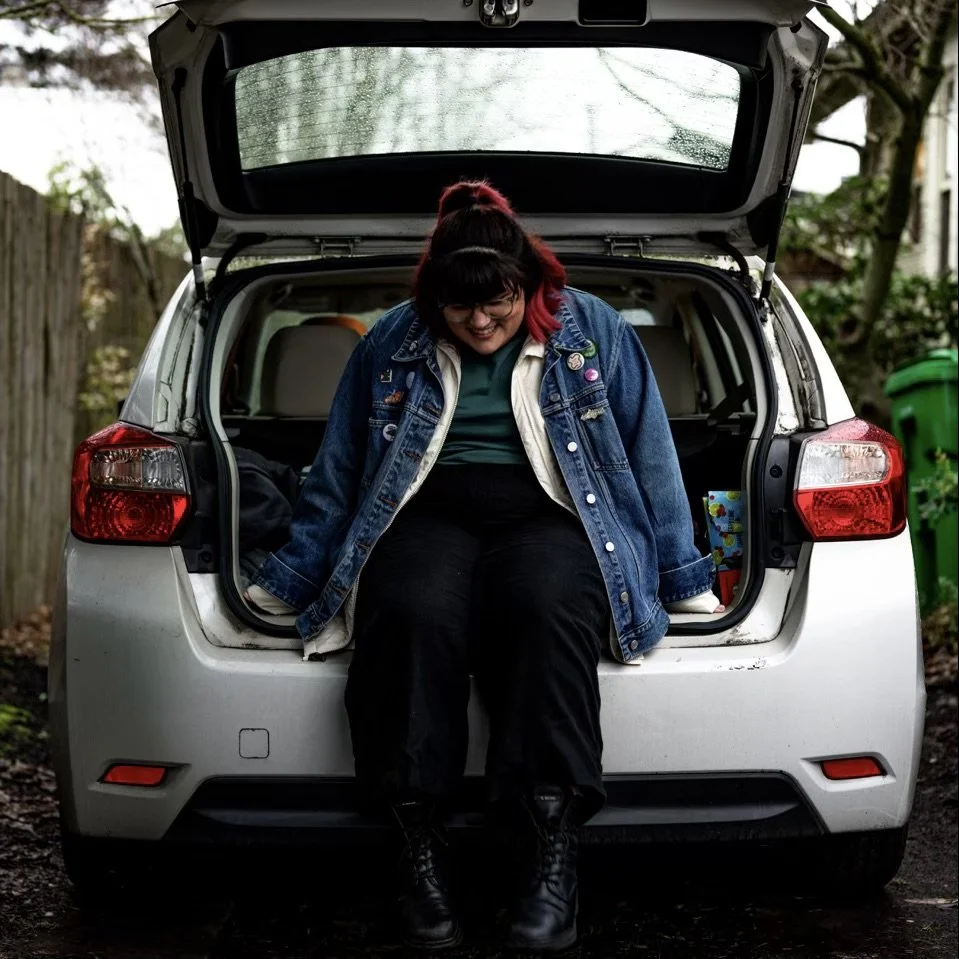
Elena Ender spends her time writing silly little stories, scouring local dives for live music, and clowning around with her friends in Portland, OR. Her debut chapbook, Still Alive, I’m Afraid. is available now thanks to Bullshit Lit. You can find her online as: @elena_ender.